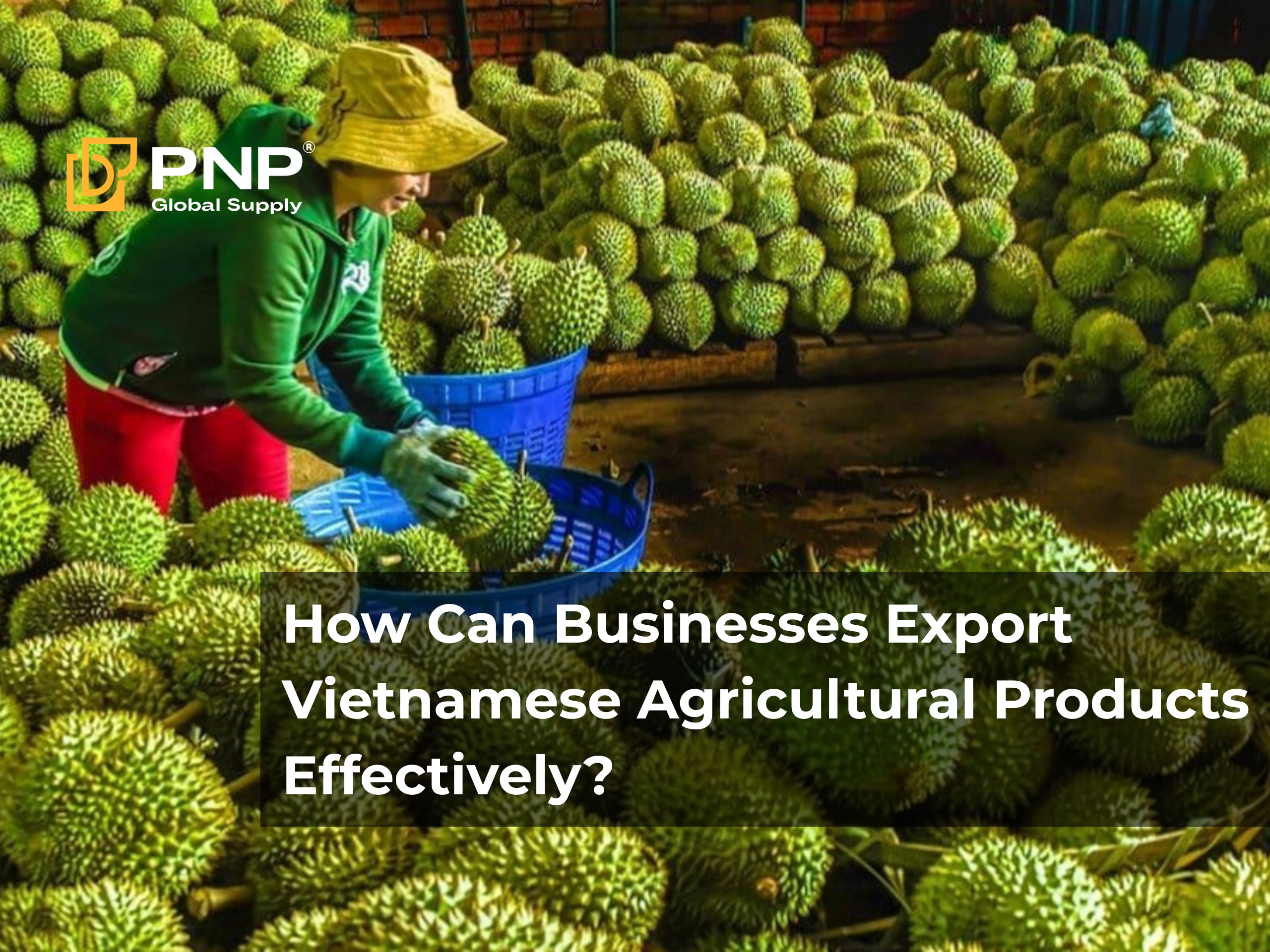
Exporting Vietnamese agricultural products is creating significant opportunities for businesses thanks to the growing demand in international markets. However, many companies still face difficulties because they do not fully understand export procedures and documentation requirements, leading to delays or unexpected costs. This article provides a quick guide to the essential steps and export procedures to help businesses implement their export operations more efficiently.
Exporting Vietnamese Agricultural Products
1. Market and Quality Requirements for Exporting Vietnamese Agricultural Products
Before starting the process of exporting Vietnamese agricultural products, businesses need to clearly understand market requirements while ensuring consistent product quality. These are key factors that determine the competitiveness of exported agricultural products and help minimize errors in export procedures and international shipping documentation.
1.1. Quality Standards and Certifications
- Obtain certifications such as VietGAP, GlobalGAP, and Organic to ensure food safety standards and facilitate access to international markets.
- Comply with packaging and labeling regulations by clearly stating product information, origin, manufacturing date, and expiry date according to the requirements of each country.
- Ensure consistent product quality, including proper size, cleanliness, absence of impurities, and compliance with export standards.
=> Meeting these standards helps Vietnamese agricultural exports increase product value and improve acceptance in importing markets.
VietGAP, GlobalGAP, and Organic Certifications Ensure Product Quality and Food Safety
1.2. Market Regulations and Quarantine Requirements
- Understand import regulations of each market (such as the US, EU, and China), especially food safety and quality control requirements.
- Conduct mandatory phytosanitary inspections to ensure products are free from pests and harmful elements.
- Strictly control pesticide residues and chemical levels according to the permitted limits of each importing country.
- Maintain a transparent traceability system from cultivation areas to packaging stages.
Complying with these requirements helps Vietnamese agricultural exports proceed smoothly and prevents shipments from being rejected during international export procedures.
2. Specific Steps to Export Vietnamese Agricultural Products
To export Vietnamese agricultural products effectively, businesses must complete every step carefully, from negotiation to delivery and payment. A clear process helps reduce mistakes in export procedures and ensures smooth international shipping operations.
5 Steps for Exporting Agricultural Products
Step 1: Prepare and Sign the Sales Contract
- Find customers and identify suitable target markets.
- Negotiate delivery terms (Incoterms), pricing, and delivery schedules.
- Sign the Sales Contract.
- Agree on payment methods (T/T, L/C, etc.).
=> This is the foundation step that clearly defines the rights and responsibilities of both parties before exporting Vietnamese agricultural products.
Step 2: Prepare Goods and Export Documents
- Source or manufacture products that meet export standards.
- Package and label products according to the importing market’s regulations.
- Prepare required documents such as Invoice, Packing List, Certificate of Origin (C/O), and Phytosanitary Certificate.
=> This step determines whether the goods are eligible for export and helps avoid risks during export customs procedures.
Step 3: Customs Declaration and Clearance
- Submit accurate electronic customs declarations for the shipment.
- Provide documents and wait for customs classification (green, yellow, or red channel).
- Conduct customs inspections (if required) and complete clearance procedures.
=> Accurate declarations help shorten processing time and avoid errors during export procedures.
Step 4: International Transportation
- Book shipping space with shipping lines or airlines.
- Deliver goods to the port or airport on schedule.
- Receive the Bill of Lading as the transportation document.
=> This is an important step in international export procedures and directly affects delivery schedules.
Step 5: Payment and Order Completion
- Send the full set of documents to the buyer according to contract terms.
- Receive payment through the agreed payment method.
- Track the shipment and handle any arising issues.
=> Completing all procedures properly helps ensure safe Vietnamese agricultural exports, stable cash flow, and long-term credibility with partners.
3. Important Notes When Exporting Vietnamese Agricultural Products
To export Vietnamese agricultural products successfully, businesses should focus on several key points in export documentation and international shipping procedures:
- Carefully check all documents before customs declaration: Ensure information on the Invoice, Packing List, C/O, and related documents is accurate to avoid declaration errors.
- Meet importing market standards: Each country has its own requirements regarding product quality, quarantine, and food safety, especially regulations on chemical residues and traceability.
- Pay close attention to phytosanitary inspections: This is a mandatory requirement for exporting agricultural products internationally. Proper preparation of inspection documents and compliance with regulations help goods clear customs quickly and avoid rejection.
- Choose reliable logistics partners: Professional logistics and customs declaration providers help optimize time, reduce costs, and minimize errors during export procedures.
- Manage international payment risks: Businesses should select suitable payment methods (such as T/T or L/C) to ensure financial security when exporting Vietnamese agricultural products.
=> In practice, many businesses choose to cooperate with companies such as PNP Global Supply for comprehensive support, from process consultation and document preparation to phytosanitary inspection handling. This not only saves time but also ensures that goods fully comply with export regulations.
4. Conclusion
To achieve high efficiency in exporting Vietnamese agricultural products, businesses need to follow the correct process from preparing goods and documents to customs declaration and transportation. Understanding export procedures, especially international shipping requirements, helps businesses clear customs faster, reduce costs, and minimize risks.