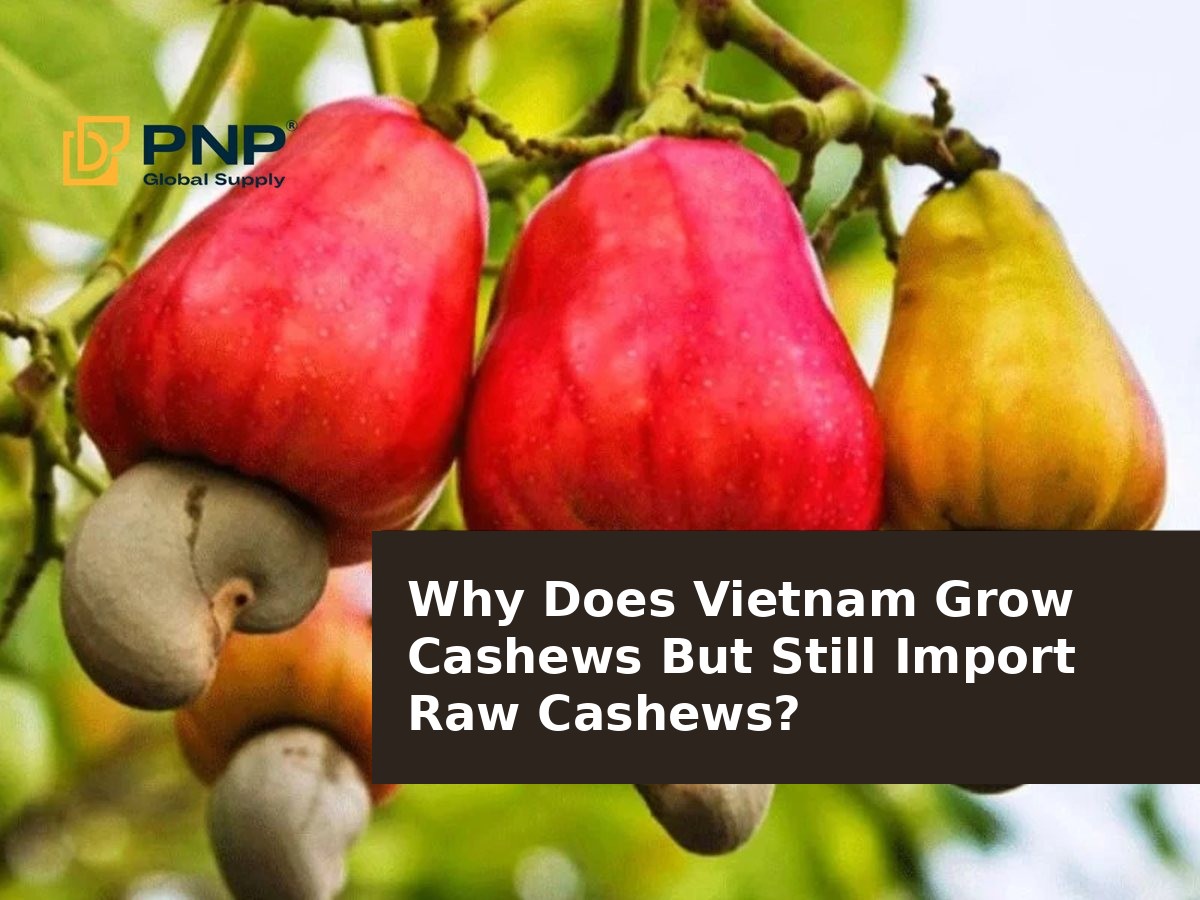
Vietnam is known as one of the world’s leading countries in producing, processing, and exporting cashew nuts. For many consecutive years, Vietnam has remained among the top exporters of cashew kernels, supplying major markets such as the United States, Europe, China, Japan, and the Middle East. However, one fact often surprises buyers: despite having a large cashew-growing area, Vietnam still imports a very large volume of raw cashews every year.
So why does Vietnam still import raw cashews from abroad? What benefits do raw cashew imports bring to Vietnam’s cashew industry? This article explains the key reasons in detail.
1. Vietnam Is More of a Cashew Processing Powerhouse Than a Raw Material Powerhouse
When people talk about Vietnam’s cashew industry, many assume that domestic cashew production is enough to meet processing and export demand. In reality, Vietnam is currently the world’s largest cashew processing center, with modern factories concentrated mainly in Binh Phuoc, Dong Nai, Binh Duong, and parts of the Central Highlands.
The processing capacity of Vietnamese enterprises reaches millions of tons of raw cashews each year. Meanwhile, domestically harvested cashews only meet part of the raw material demand. This forces businesses to source raw cashews from other countries to maintain continuous production.
In other words, Vietnam is stronger in processing and exporting cashew kernels than in supplying raw cashews.
2. Domestic Cashew Production Has Not Met Demand
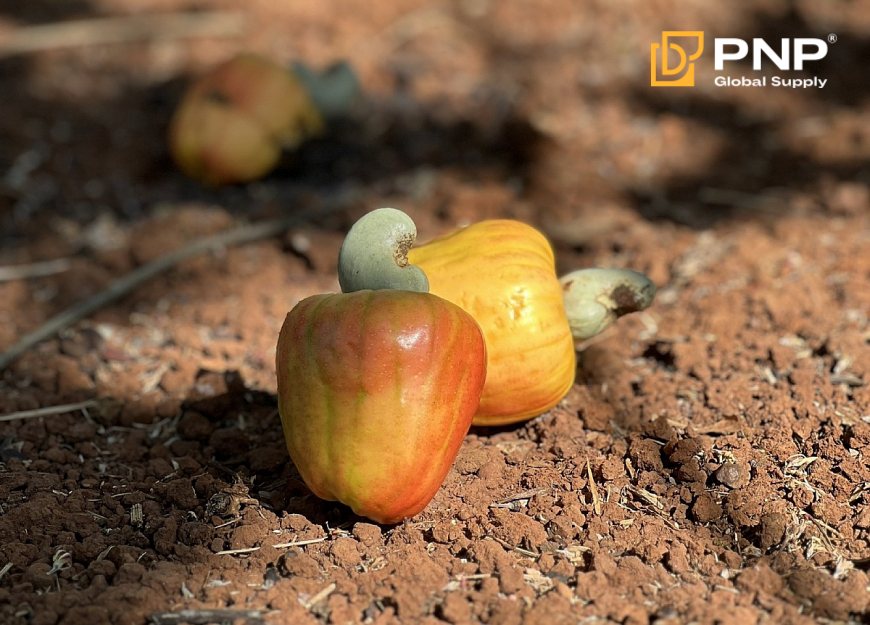
One important reason Vietnam imports raw cashews is that domestic production is not sufficient for the processing industry. In recent years, cashew-growing areas in many localities have declined as farmers shift to crops with higher economic returns, such as durian, avocado, pepper, and other fruit trees.
Many cashew orchards are also old, low-yielding, and have not been systematically replanted. Unfavorable weather, including drought, unseasonal rain, and pests, also directly affects harvest output.
Therefore, although Vietnam remains a major cashew-growing country, domestic production cannot fully meet the raw material needs of hundreds of processing factories.
3. Export Demand for Cashew Kernels Continues to Grow
Another reason raw cashew imports have become necessary is the continuous growth in global demand for cashew kernels. Cashews are widely used in the food industry, confectionery, plant-based milk, diet foods, and premium processed food products.
To fulfill large export orders from the United States, Europe, and other markets, Vietnamese businesses need a stable year-round supply of raw materials. If factories rely only on domestic supply, many cannot maintain production capacity or complete signed export contracts on time.
4. African Raw Cashews Offer Large Supply and Competitive Prices
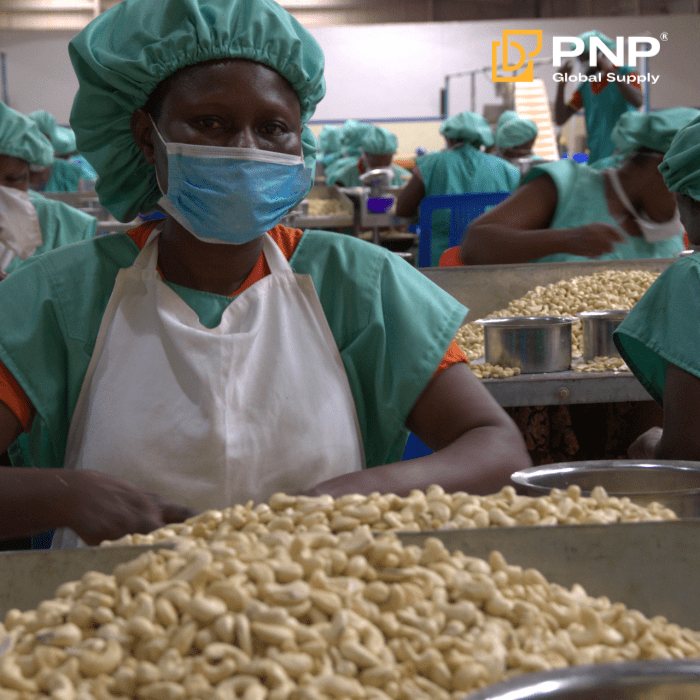
Today, most raw cashews imported into Vietnam come from African countries such as Côte d’Ivoire, Ghana, Nigeria, Benin, Tanzania, and Burkina Faso. These countries have large cashew-growing areas and high annual harvest volumes.
At many times, imported raw cashew prices from Africa are also more competitive than domestic raw materials. With abundant supply and reasonable costs, Vietnamese enterprises can plan production more proactively and optimize business efficiency.
This is one of the key reasons Vietnam’s cashew industry continues to import raw materials on a large scale.
5. Vietnam Leverages Its Deep Processing Advantage
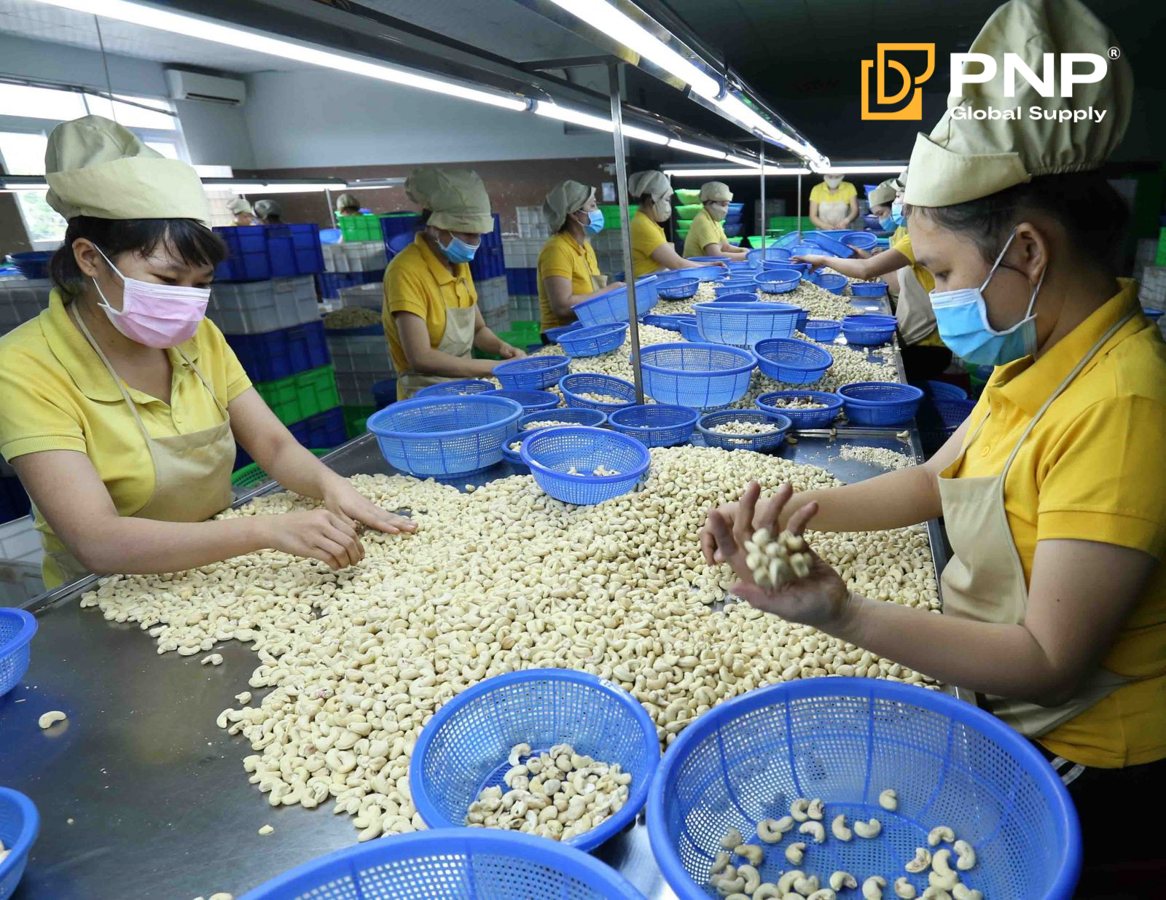
Instead of exporting raw cashews, Vietnam focuses on deep processing to increase product value. After importing raw materials, businesses steam the nuts, remove shells, peel the testa, sort kernels, roast or dry them, and package the final products.
This process creates products with much higher economic value than raw cashews. It is also why Vietnam can continue to hold a leading position in global cashew kernel exports even while importing raw materials.
6. The Role of Cashew Companies in Binh Phuoc
Binh Phuoc is considered Vietnam’s cashew capital, with the country’s largest cashew-growing area, a modern processing factory system, and an experienced labor force. Many cashew companies in Binh Phuoc not only purchase domestic cashews but also directly import raw cashews from Africa for production.
Thanks to investment in processing technology, companies in Binh Phuoc have created high-quality product lines that meet strict international market requirements. This region also contributes a large share of Vietnam’s current cashew kernel exports.
7. What Factors Affect Imported Raw Cashew Prices?
Many businesses pay close attention to imported raw cashew prices because they directly affect production costs. In practice, raw cashew prices fluctuate based on global supply, raw nut quality, logistics costs, and exchange rates.
When harvest output in major exporting countries declines, raw cashew prices usually rise. If the crop is strong, raw material prices may decrease. Quality indicators such as kernel outturn ratio, moisture content, and defect rate also affect buying and selling prices.
8. Does Importing Cashews Affect Domestic Cashew Farmers?
Raw cashew imports do not necessarily disadvantage domestic farmers. Maintaining processing capacity helps factories operate steadily, creates jobs for a large workforce, and preserves Vietnam’s position in cashew exports.
However, to strengthen the domestic cashew sector, Vietnam needs to renovate old orchards, adopt high-yield varieties, provide better technical support to farmers, and improve raw material quality. These actions can help increase domestic output and reduce dependence on imported supply over time.
9. Outlook for Vietnam’s Cashew Industry
Although Vietnam imports large volumes of raw cashews every year, the industry still has strong growth opportunities. Global demand for cashews is expected to keep rising due to the trend toward healthy foods and plant-based products.
Free trade agreements also create favorable conditions for Vietnamese cashew kernel exports. Combining imported raw materials with modern processing capacity will remain an important advantage that helps Vietnam maintain its leading position in the global cashew industry.
Conclusion
Although Vietnam has a long tradition of cashew cultivation, it imports large volumes of raw cashews because domestic raw material production has not met processing and export demand. Raw cashew imports from African countries help businesses maintain production capacity, fulfill international orders, and take advantage of Vietnam’s deep processing strengths.
As global demand for cashew kernels continues to increase, combining domestic raw materials with imported supply will remain an important strategy for cashew companies in Binh Phuoc and the wider Vietnamese cashew industry.
Contact us:
Facebook: PNP Logistics
Phone: 039 880 2946
Email: info@pnpglobalsupply.com