In export manufacturing, processing, and export-processing activities, the customs finalization report is an important file that helps Customs monitor imported raw materials, exported finished goods, and the actual inventory balance of a business. However, because the volume of documents is large and data from accounting, warehouse, and customs systems may not always match, errors can occur when preparing the report.
Many businesses ask how penalties for incorrect customs finalization reports are applied, whether amending a submitted report may still lead to a fine, and whether they should handle the correction internally or use a customs finalization report service. This guide explains common errors, potential penalties, and practical ways to reduce risk during the customs settlement process.

1. What Is a Customs Finalization Report?
A customs finalization report is the document a business uses to report the use of imported raw materials, supplies, and exported products under export manufacturing, processing, or export-processing enterprise models in accordance with customs regulations.
In practice, the report allows Customs to compare the quantity of imported materials with the quantity used in production, the quantity of exported products, and the remaining inventory. Therefore, the data in the report should be connected to import and export declarations, production norms, warehouse records, and the company’s accounting system.
One important part of preparing the report is the inventory in/out/stock table. This table helps the business track the flow of raw materials from import, through production, to finished goods.
If the inventory in/out/stock figures are inaccurate, the customs finalization report may be incorrect. The business may then need to explain, amend, or face penalties depending on the nature of the error and when it is discovered.
2. Common Errors in Customs Finalization Reports
Errors in customs finalization reports may arise from many causes. A common issue is entering the wrong quantity of materials, supplies, or products during data consolidation.
Another common problem is inconsistency between accounting software, warehouse management software, and customs declaration data. If the person preparing the report only summarizes data from one source without cross-checking the others, discrepancies can occur.
Businesses may also fail to update amended declarations, cancelled declarations, or transactions that occur after the original declaration. If these changes are not reflected in the internal management system, year-end figures may not represent the actual situation.
Inaccurate consumption norms can also affect the settlement result. When material consumption norms do not match actual production, the reported material usage and ending inventory may be distorted.
3. Are All Incorrect Customs Finalization Reports Penalized?
This is an important point for businesses to understand. Not every error in a customs finalization report automatically leads to the same penalty.
Penalties for incorrect customs finalization reports depend on the content of the violation, the cause, the consequences, the time of discovery, and whether the business proactively reports and corrects the issue.
Some data errors may come from aggregation mistakes or operational misunderstandings and may not change tax obligations, especially if the business proactively corrects them according to regulations. In other cases, incorrect data may create discrepancies in raw materials or supplies, or lead to underpaid tax. These situations carry higher legal risk.
Businesses should not assume that simply “correcting the report” will exempt every error from penalties. The nature of the discrepancy and the applicable legal basis should be reviewed carefully.
4. Will a Business Be Penalized for Amending a Customs Finalization Report?
The question of whether amending a customs finalization report leads to a penalty often arises when a business discovers incorrect data after the report has already been submitted.
In principle, businesses should distinguish between proactively correcting or supplementing information under regulations and violations discovered by Customs during an inspection.
If a business identifies inaccurate data, it should quickly review the cause and make the correction properly instead of allowing the error to remain unresolved. Proactive checking and correction help reduce risk, but they do not mean that every amended report will automatically avoid penalties.
This is especially important if the error relates to imported material quantities, exported product quantities, or tax obligations. The business should fully assess the issue before making any amendment.
Before amending a report, the business should review all data, identify where the error occurred, determine which period was affected, understand the cause, and confirm whether the discrepancy affects tax obligations.
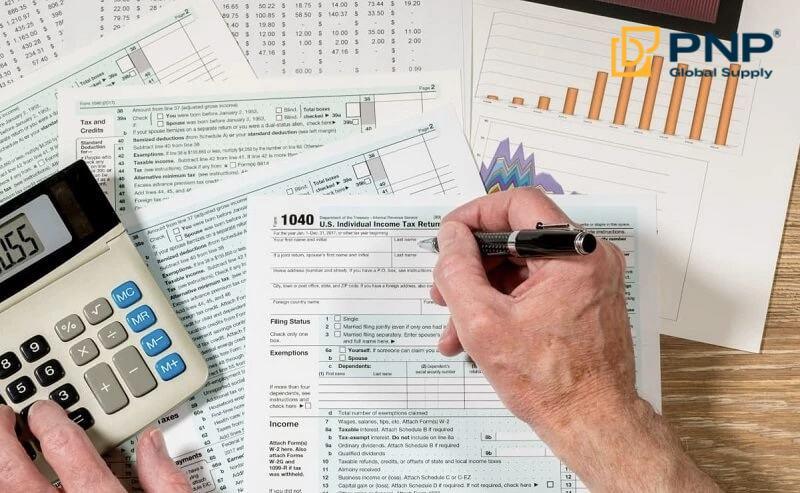
5. The Role of Inventory In/Out/Stock Records in Customs Finalization
The inventory in/out/stock table is one of the most important data sources for checking whether a customs finalization report is reasonable.
In general, businesses need to track materials under the formula: beginning inventory + imports during the period – materials issued or used during the period = ending inventory.
However, preparing inventory records for an export manufacturing business is not only a simple addition and subtraction exercise. The data must be reconcilable with customs declarations, warehouse receipts, warehouse issue slips, production data, and other supporting documents.
If the inventory table shows illogical figures, such as negative inventory, materials issued greater than available quantity, or figures that do not match supporting documents, this may indicate a problem in the company’s material management system.
For this reason, businesses should check inventory in/out/stock records periodically instead of waiting until the customs finalization report is due.
6. Why Do Businesses Easily Make Errors in Customs Finalization Reports?
A common reason is that businesses have not built a unified data management process across import-export, accounting, warehouse, and production departments.
The import-export team manages customs declarations, accounting manages documents and value, the warehouse manages actual quantity, and production tracks material usage in each stage. If these departments use different material codes, units of measurement, or conversion methods, year-end data can easily become inconsistent.
For example, the same raw material may be managed in kilograms by the warehouse while the import-export team tracks it using another unit. Without a consistent conversion rule, consolidated figures may be inaccurate.
Businesses with many declarations or many material codes also face challenges when reconciling data manually. When data is handled across multiple separate Excel files, the risk of wrong formulas, missing data, or duplicate data increases.
7. Consequences of Errors in Customs Finalization Reports
An incorrect customs finalization report not only creates the risk of penalties but can also require the business to spend significant time explaining and reviewing documents.
If Customs conducts an inspection, the business may need to provide additional documents related to imported raw materials, exported products, material usage, and inventory balances.
If the data is not organized well, the explanation process can take longer and increase personnel costs.
For discrepancies related to tax, the business may also have to fulfill additional financial obligations under applicable regulations. Therefore, early checking and early detection of errors are always better than waiting until Customs discovers the issue.
8. What Should a Business Do When It Finds an Error?
When a business discovers an error in its customs finalization report, it should not arbitrarily change figures before identifying the cause. The first step is to review the original data and determine where the discrepancy occurred.
The business should reconcile import declarations, export declarations, warehouse receipts, warehouse issue slips, production data, consumption norms, and actual inventory. A reconciliation table should then be prepared to identify the discrepancy.
Next, the business should determine whether the discrepancy affects tax obligations or customs management criteria. This is an important step for choosing the right handling method.
If the issue is complicated, the business should consult a customs specialist before making corrections. Incorrect handling may make the file harder to explain later.
9. Should Businesses Use a Customs Finalization Report Service?
For businesses with many declarations, multiple material codes, or complicated production processes, preparing the customs finalization report internally can take a lot of time.
In these cases, using a customs finalization report service is an option worth considering. A specialized provider can help review import data, export data, production norms, inventory records, and build the inventory in/out/stock table for the reporting process.
However, businesses should remember that an external service does not replace the company’s responsibility for data accuracy. The business still needs to provide complete and accurate data and cooperate during reconciliation.
A good service provider should not only summarize figures but also point out unusual data so the business can resolve problems before submitting the report.
10. How Can a Logistics Company Support Businesses?
An experienced logistics company can support businesses in many areas related to customs and import-export operations.
For customs finalization reports, a logistics provider can help review declaration data, check material information, and coordinate with the relevant departments to reconcile records.
For export manufacturing businesses, managing the flow of materials from import to exported products requires coordination across many teams. A logistics company with practical customs experience can help standardize the process and reduce errors during customs procedures.
Businesses should choose a provider with real experience in export manufacturing, processing, or export-processing enterprises, rather than selecting only based on service fees.
11. How to Reduce the Risk of Penalties for Incorrect Customs Finalization Reports
To reduce the risk of penalties, businesses should build a data control process from the beginning of the period.
First, material codes, product codes, and units of measurement should be standardized across warehouse, accounting, production, and customs data systems. Second, import and export data should be updated regularly instead of being consolidated only at year-end.
Businesses should periodically check inventory in/out/stock records to identify unusual data. Negative inventory, quantity discrepancies, or unallocated materials should be handled early.
Businesses should also maintain complete supporting documents and build a data retrieval system so they can quickly provide explanations to Customs when needed.
Most importantly, businesses should not wait until an inspection plan is announced before reviewing their records. Regular self-checking helps detect errors earlier and allows for more proactive correction.
12. Important Notes When Preparing Customs Finalization Reports
To improve the accuracy of a customs finalization report, businesses should pay close attention to consistency between departments.
Import declarations should be fully checked. Export data should be reconciled with finished product output. Production norms should be managed and updated according to actual production. Ending inventory should have supporting evidence and match the company’s internal management system.
Businesses should also pay attention to amended declarations, cancelled declarations, adjusted declarations, or special transactions. If these are not fully updated, they can create large discrepancies when preparing the report.
Customs finalization control should be treated as a regular process, not merely a year-end administrative task.

Conclusion
Penalties for incorrect customs finalization reports are an important concern for export manufacturing businesses because data errors can lead to documentation problems, lengthy explanations, and financial obligations depending on the case.
To reduce risk, businesses should tightly control data from imported materials, production, export, and inventory. The inventory in/out/stock table should be built and reconciled regularly so that the figures remain logical and consistent with actual documents.
Businesses that lack specialized staff or have complex data systems may consider using a customs finalization report service from an experienced logistics company or professional provider. The most important point is to review errors early, identify the correct cause, and handle the issue according to regulations instead of changing figures without proper assessment.
Contact us:
Facebook: PNP Logistics
Phone number: 039 880 2946
Email: info@pnpglobalsupply.com