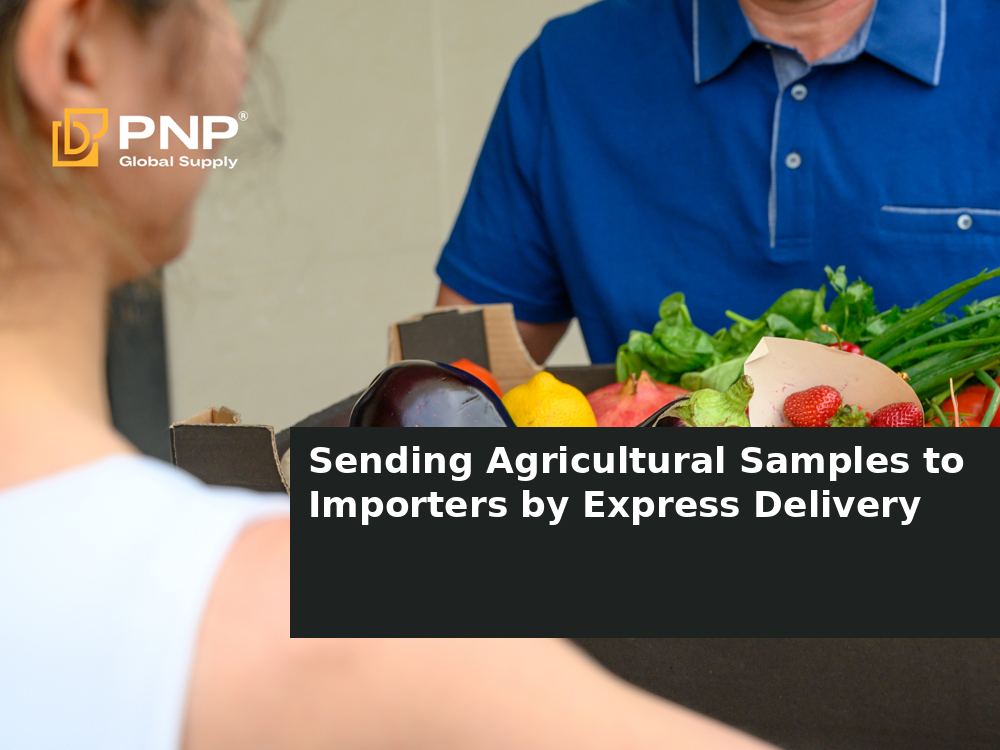
In agricultural export activities, sending samples to importers is a crucial step before both parties proceed to a formal commercial order. Through product samples, importers can assess the quality, color, taste, packaging specifications, and compliance with market standards. For Vietnamese businesses seeking international customers, sending samples correctly not only shortens negotiation time but also creates a professional impression with partners.
Instead of using sea freight with longer delivery times, businesses can choose an international express delivery service to send samples promptly. However, shipping agricultural samples is not as simple as sending ordinary documents. Packaging, documentation, destination-country rules, customs declarations, and potential specialized inspections all need to be considered.
How can businesses send agricultural samples to importers using express delivery, and what should they prepare? The following sections explain the process and key precautions.
1. Why should you send samples of agricultural products before official export?
In international trade, importers often want to inspect products before signing large-quantity contracts. This is especially true for items like cashews, coffee, pepper, rice, dried fruit, or processed agricultural products, where the actual quality can directly impact purchasing decisions.
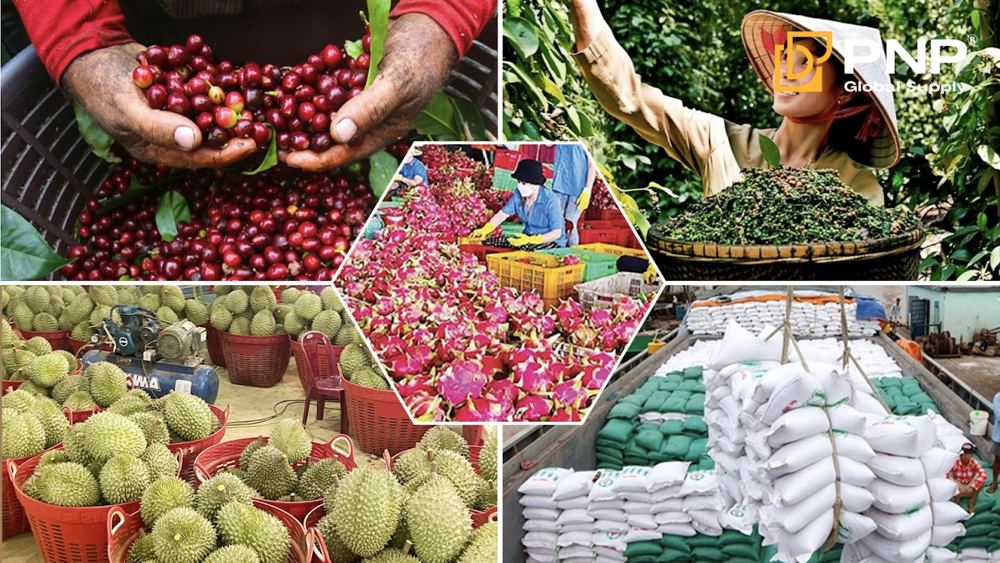
Sending samples allows importers to inspect products based on criteria that images or catalogs cannot fully represent. For example, with coffee, customers may need to evaluate aroma, color, and roasting characteristics. With cashews, they can check kernel size, color, breakage rate, and overall product quality.
If the sample meets the requirements, the two parties can continue to negotiate the price, quantity, delivery terms, and export schedule. Therefore, sending samples is an important supporting step in the process of finding and developing international customers.
2. What is international express delivery service?
International express delivery is the transportation of goods, documents, or parcels between countries through an international transport network. For small agricultural samples, businesses often consider it because of its speed and relatively convenient handling process.
Unlike sea freight, which is generally suitable for large shipments, express delivery may be more suitable for product samples that need to be sent urgently for evaluation by importers.
Depending on the destination, product, and selected service, the carrier may use an air express network to transport the samples internationally. After arrival, the parcel passes through the carrier’s local handling and delivery network.
3. Why should you use air freight to send samples?
Speed is a major advantage of air express delivery. Shorter transit times make it easier to exchange samples and feedback with international buyers during negotiations.
If samples are sent by sea, businesses may have to wait for a long time. Meanwhile, air freight typically has significantly shorter transit times for suitable international routes.
Besides speed, this method is also convenient for small shipments. Businesses don't need to wait to accumulate a large quantity as they would with containerized commercial exports.
However, the cost per kilogram for air freight is generally higher than for sea freight. Therefore, express delivery is more suitable for products with small weight and where the value of reaching the customer outweighs the shipping cost.
4. Procedure for sending agricultural product samples to importers.
4.1 Step 1: Identify the importer's requirements.
Before sending samples, businesses need to clearly discuss with customers the type of product, quantity, specifications, and quality requirements.
Importers may require samples according to a specific standard. For example, customers buying cashews might request a certain size of kernel. For coffee, they might request a specific type of bean, origin, processing method, or roasting level.
Pre-confirmation helps businesses avoid sending samples that don't meet requirements and saves on shipping costs.
4.2 Step 2: Check the regulations of the importing country.
This is a particularly important step when submitting agricultural product samples.
Not all agricultural products can be shipped to all countries using the same process. Some products may be subject to specific phytosanitary requirements, food safety standards, certificates of origin, or import conditions.
Therefore, before shipping, businesses need to check whether the product is permitted for import as a sample and what documents are required.
Labeling a package as a "sample" does not automatically exempt the goods from all regulatory requirements. Businesses still need to truthfully declare the type of goods, the purpose of shipment, and their appropriate value.
4.3 Step 3: Prepare samples and packaging
Agricultural products need to be packaged appropriately according to their characteristics and shipping time.
For dry agricultural products such as coffee, pepper, or cashews, packaging needs to ensure protection from moisture, dust, and physical impact. If the product is susceptible to moisture absorption, businesses can use packaging with suitable moisture-resistant properties.
For products with strong odors, the packaging needs to be tightly sealed to minimize the impact on other shipments during transportation.
If sending samples of fresh fruit or agricultural products, businesses need to carefully check the temperature requirements, shipping time, and import conditions before choosing a delivery method.
4.4 Step 4: Prepare the documents
Depending on the type of goods, value, and importing country, businesses may need to prepare relevant documents such as invoices, packing lists, or product descriptions.
On the document, businesses need to accurately state the name of the goods, quantity, weight, purpose of sending samples, and the sender and recipient information.
Product names should not be too vague. For example, instead of simply stating "agricultural product," businesses should specifically describe the type of product accurately.
Clear declarations provide the shipping company and the customs authorities of the importing country with a basis for processing the shipment.
5. What is an air waybill and what is its role?
When shipping by air, businesses will use an air waybill, commonly abbreviated as AWB.
An air waybill is an important document that shows information about the shipment and its transportation between the sender, the carrier, and the recipient.
An air waybill typically includes the sender’s and recipient’s names and addresses, the destination or airport, the number of packages, weight, goods description, and other transport details.
For agricultural products shipped via express delivery, businesses need to carefully check the information on the shipping document before the goods are dispatched. Incorrect recipient name, address, or phone number can cause difficulties in the delivery process.
Goods descriptions on the air waybill and commercial documents should be consistent.

6. How to record information about samples when shipping internationally.
One common mistake businesses make is providing overly vague product descriptions. Simply stating "sample" may not adequately convey the product's essence.
Businesses should describe their products specifically, such as "roasted coffee beans sample," "cashew kernels sample," or the actual product name.
In addition to the product name, businesses need to indicate the quantity, weight, and purpose of shipment.
If the goods are samples not intended for commercial sale, businesses may state the purpose as "sample for testing/evaluation" if it is relevant to the actual transaction. However, misrepresentation of the nature of the goods or intentionally declaring a value of zero should be avoided if regulations require the value of the goods to be shown for customs purposes.
7. Do agricultural product samples need to be quarantined?
The answer depends on the type of agricultural product, its condition, and the regulations of the importing country.
For certain types of plant-based agricultural products, importing countries may apply phytosanitary regulations even if the goods are sent for sampling purposes.
Meanwhile, some highly processed products may be subject to different regulations than fresh produce or raw plant materials.
Therefore, businesses should not assume that "samples" will be exempt from quarantine. Specific requirements should be checked before shipment to avoid situations where goods are held at border crossings, require additional documentation, or are refused import.
8. The role of logistics companies
A logistics provider with agricultural shipping experience can help businesses prepare and send samples internationally.
Logistics companies can advise on shipping methods, check packaging specifications, assist in preparing documentation, and guide businesses in providing goods information to courier companies.
For businesses sending samples to a new market for the first time, support from an experienced logistics partner can reduce preparation errors.
Businesses should choose a shipping company with experience in international routes and agricultural products, rather than simply selecting one based on the lowest shipping cost.
9. Is express logistics suitable for all types of agricultural products?
Not every agricultural product is suitable for a standard express delivery service.
For small samples, dry products, packaged products, and products with a long shelf life, express delivery is often the convenient option.
Fresh, perishable, or temperature-sensitive products require a careful assessment before using standard express delivery.
Businesses need to consider shipping times, storage conditions, import requirements, and the ability to handle goods at the destination country.
If the sample is highly valuable or very sensitive to temperature, the business may need a specialized shipping solution instead of a standard delivery service.
10. How can we optimize the cost of sending agricultural product samples?
Although samples are typically small in size, international shipping costs can still be relatively high. To optimize the budget, businesses should agree with customers on the actual number of samples needed.
It's not advisable to send too many samples when the importer only requests a small quantity for testing. Additionally, businesses should choose appropriate packaging sizes to avoid excessive volumetric weight.
Before shipping, it's advisable to request a quote from the logistics company based on both the actual weight and the volumetric weight. This helps businesses accurately estimate costs.
If multiple samples are being sent to the same customer, businesses may consider packing them together in one shipment if it meets shipping requirements and import regulations.
11. Mistakes to avoid when sending agricultural product samples internationally.
A common mistake is shipping goods first without checking the destination country's import regulations. This can result in samples being held or returned.
The second mistake is improper packaging. Open, easily torn, or non-moisture-proof packaging can affect the sample during transit.
The third mistake is inaccurate declaration of goods. Businesses should not declare goods with overly vague names or declare incorrect values in order to reduce costs.
Additionally, it's necessary to carefully check the recipient's information, including email address, phone number, and physical address. The importer may need to coordinate with the courier service or customs authorities in the destination country to complete the procedures for receiving the goods.
12. What should businesses prepare before submitting samples?
Before handing samples to a courier, businesses should confirm the buyer’s requirements, check import rules, prepare the goods, complete suitable packaging, and arrange the necessary documents.
Information on the invoice, packing list, and air waybill should be consistent. Businesses should also photograph the packaged samples before handover so they have a record if a problem occurs.
After the goods have been shipped, it is necessary to track the shipping status and proactively coordinate with the customer if the delivery company requests additional information.
Conclusion
Sending samples helps Vietnamese businesses reach importers and develop international markets. For small agricultural samples requiring prompt delivery, international express delivery can be a practical option because of its speed and convenience.
However, businesses should note that sending agricultural product samples may still be subject to customs, quarantine, and import regulations depending on the country. Therefore, before sending, it is necessary to carefully check the type of goods, packaging specifications, documentation, and requirements of the destination market.
Choosing a suitable air express service, preparing the air waybill correctly, and working with an experienced logistics provider can make sample shipments smoother. Express delivery should be viewed as part of an international customer-development strategy, not simply as a delivery method.
When samples are delivered on time, with the right quality, and meeting import requirements, businesses will have more opportunities to build trust with importers and move towards larger commercial agricultural orders.
Contact us:
Facebook: PNP Logistics
SĐT: 039 880 2946
Email: info@pnpglobalsupply.com