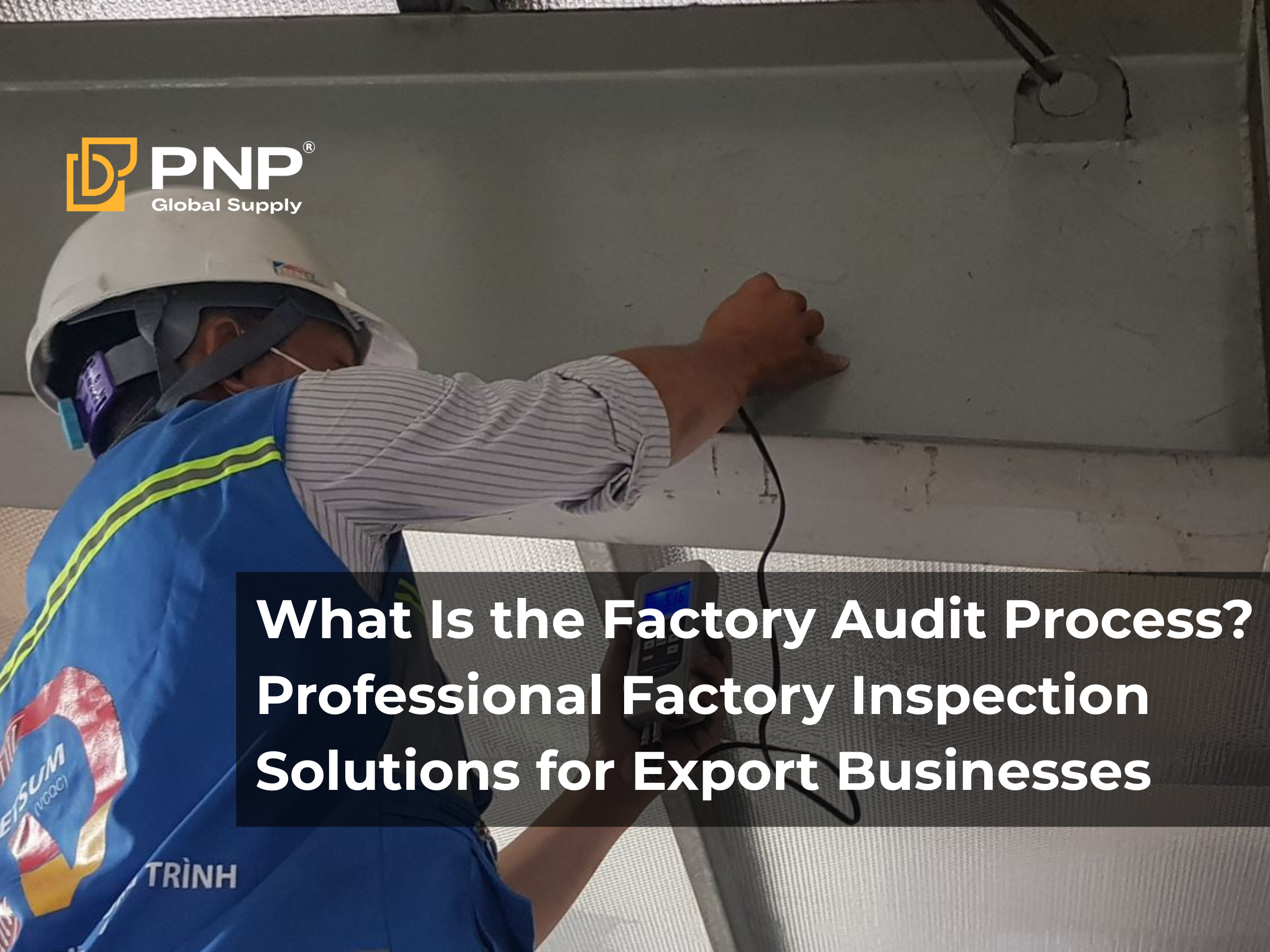
In export activities, factory audits play an important role in helping businesses evaluate production capacity, management systems, and the supplier’s ability to meet required standards. For export manufacturing companies, conducting a professional factory inspection helps minimize risks related to quality, production timelines, and costs.
So, what is the factory audit process, how should factory inspection documents be prepared, and what does the audit conclusion reflect? This article will help you understand the entire process and choose an effective factory audit service.
Factory Audit Activities
1. What Is a Factory Audit? The Role and Required Factory Inspection Documents
1.1. Definition of Factory Audit and Its Role for Export Manufacturing Companies
A factory audit is the process of evaluating a factory’s actual production capacity, management system, and compliance with required standards. For export manufacturing companies, factory audits help ensure product quality, meet international customer requirements, and reduce cooperation risks.
1.2. What Documents Are Required for a Factory Inspection?
- Business license
- Human resources and management records
- Production process documentation
- Quality certifications (ISO, FSC, etc.)
- Environmental and occupational safety documents
Factory Inspection Documents
2. What Is the Factory Audit Process?
Step 1 – Receiving the Factory Audit Request
- Collect business information: factory name, address, product category, export market
- Identify the audit objective: production capacity evaluation, compliance inspection, or buyer requirement
- Define the inspection scope: products, processes, applicable standards (ISO, FSC, etc.)
- Prepare the audit plan: schedule, personnel, and evaluation checklist
Step 2 – Initial Document Evaluation
- Review legal documents: business license, production registration
- Evaluate company capability records: workforce size, production capacity, export experience
- Review quality certifications and related documents
- Identify key areas requiring deeper inspection during the on-site visit
Step 3 – On-Site Factory Inspection
- Evaluate overall facilities: factory buildings, warehouses, and production areas
- Inspect machinery, equipment, and level of modernization
- Observe the actual production process (from raw materials to finished products)
- Assess worker skills and production organization
- Inspect occupational safety, hygiene, and working environment conditions
Step 4 – Evaluation of Management and Quality Systems
- Review quality control procedures (QC/QA)
- Evaluate the ability to inspect incoming materials and finished products
- Examine record storage systems and traceability processes
- Assess compliance with international standards and customer requirements
- Identify risks related to quality, production timelines, and manufacturing stability
Step 5 – Factory Inspection Report and Conclusion
- Compile all data and images collected during the audit
- Provide a factory inspection conclusion based on clear evaluation criteria
- Analyze the factory’s strengths and weaknesses in detail
- Highlight potential risks that may affect export orders
- Recommend improvement solutions and cooperation recommendations (approved / improvement required / not approved)
Factory Audit Process
3. Important Factory Audit Criteria and When Should Businesses Conduct a Factory Audit?
3.1. Important Criteria in a Factory Audit
- Evaluate actual production capacity: scale, output, and order fulfillment capability
- Inspect quality management systems: QC/QA processes and defect control
- Review compliance with international standards: ISO, FSC, or customer-specific requirements
- Assess labor and environmental conditions: safety, hygiene, and regulatory compliance
3.2. When Should Businesses Conduct a Factory Audit?
- Before signing contracts with new partners or suppliers
- When searching for or changing manufacturing factories
- When expanding production scale or handling large orders
- When international customers require a factory audit
4. Why Should Businesses Use Professional Factory Audit Services?
Using professional factory audit services helps businesses save time while ensuring objective and accurate evaluation results. Through a systematic inspection process, businesses can quickly understand a factory’s production capability, compliance level, and potential risks before cooperation.
In practice, many businesses choose experienced companies such as PNP Global Supply to conduct factory audits. With a practical approach, clear procedures, and transparent reports supported by detailed images, this company helps businesses make reliable decisions while also providing suitable improvement recommendations after the inspection if necessary.
5. Conclusion
Factory audits play a key role in ensuring businesses select the right manufacturing partners that meet quality and export standards. Conducting professional factory audits helps businesses proactively control risks, optimize costs, and improve long-term cooperation efficiency.