In import–export activities, many businesses and individuals are still unclear about what the date of customs clearance completion actually is, which leads to confusion when tracking shipment progress. In addition, not understanding customs processing time, the place of customs clearance, and customs deadlines can result in delayed clearance and extra costs. This article will help clarify each aspect so you can be more proactive in handling customs procedures.
1. What Is the Date of Customs Clearance Completion?
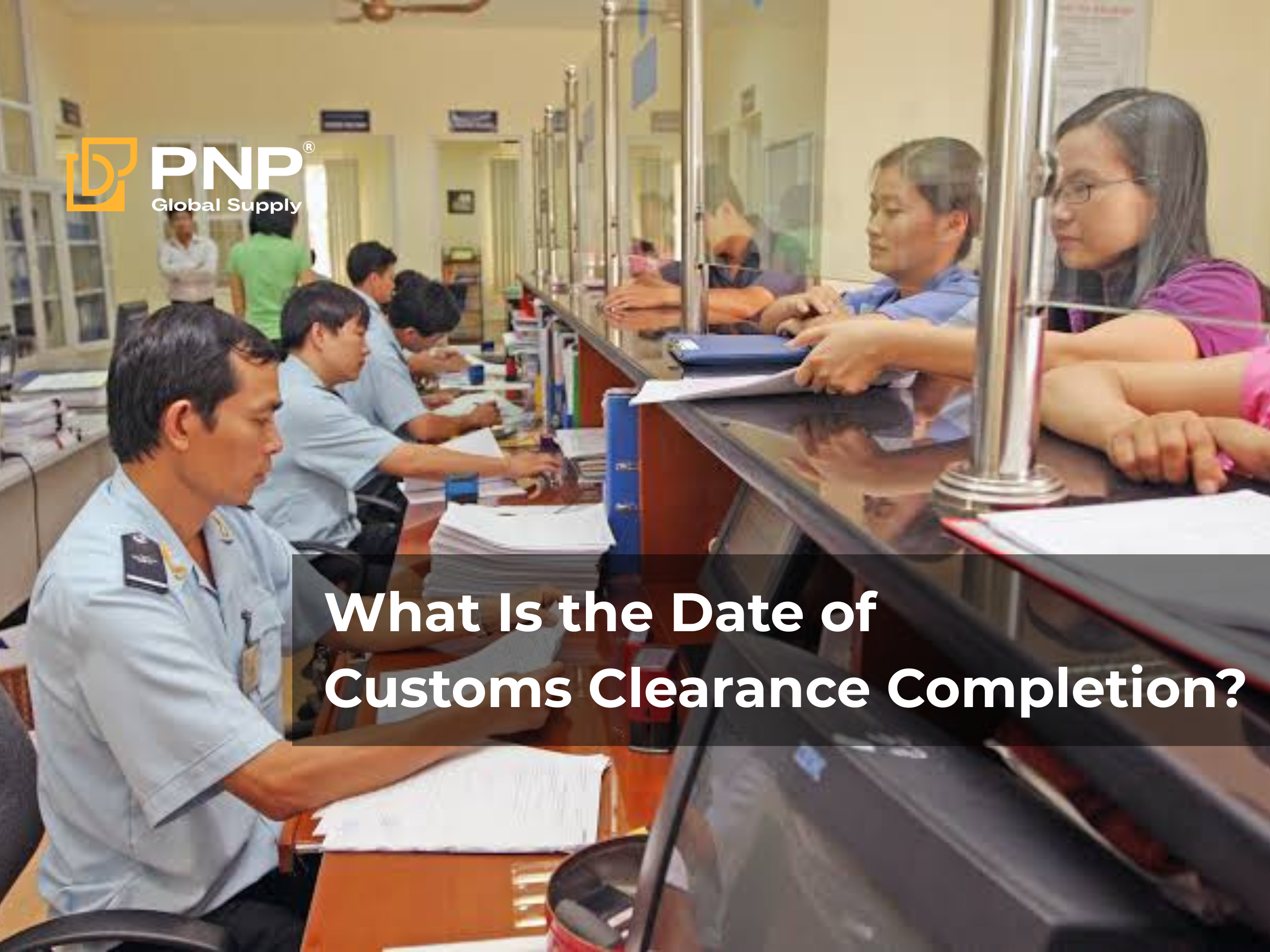
The date of customs clearance completion is the point at which a shipment has been fully declared, inspected, and approved by the customs authority for clearance or release. This marks the end of the customs procedure and is different from the declaration registration date or the cargo receipt date.
This date is determined based on the final status of the customs declaration:
- Green channel: completed immediately
- Yellow channel: completed after document inspection
- Red channel: completed after both document and physical inspection
If additional documents are required, the completion date is counted after the documents are accepted.
2. How Long Does Customs Clearance Take?
The time required for customs clearance is not fixed for all shipments. It depends on the type of goods, the accuracy and completeness of the declaration documents, and the inspection channel assigned.
If documents are complete and accurately declared under the green channel, the process is usually faster. However, if assigned to the yellow or red channel, businesses may need more time for document review, physical inspection, or additional paperwork.
2.1. Common Customs Clearance Milestones
The customs clearance process typically includes the following main stages:
- Declaration submission and registration
- Document inspection
- Physical inspection of goods (if required)
- Clearance or release of goods
Each step directly affects processing time, so businesses should closely monitor progress to manage delivery schedules effectively.
Goods classification is usually divided into three inspection channels.
2.2. Factors Affecting Customs Clearance Time
The time required to complete customs procedures is influenced by several factors, including:
- Type of goods
- Completeness and accuracy of documentation
- Inspection channel results
- Licensing or specialized inspection requirements
- Timing of submission
Proper preparation, accurate declaration, and early submission can help reduce processing time and minimize clearance delays.
3. Customs Clearance Deadlines According to Regulations
The customs clearance deadline is the period within which businesses must declare, submit documents, and fulfill all requirements with the customs authority.
- For imports: declarations can be registered before goods arrive or within 30 days from the date of arrival at the border gate.
- For exports: declarations are typically registered after goods are gathered at the designated location.
Additionally, customs authorities usually:
- Complete document inspection within 2 working hours
- Conduct physical inspection within 8 working hours (if documents and goods are sufficient)
Import Customs Declaration Form (Form HQ/2015/NK)
4. Where Are Customs Procedures Carried Out?
Businesses carry out customs procedures at the customs sub-department managing the area where goods are exported or imported, such as:
- Seaports
- Airports
- Land border gates
- Bonded warehouses
- Industrial zones
- Centralized inspection locations
5. How to Determine the Correct Place for Customs Clearance
To determine the correct customs clearance location, businesses should consider:
- Type of goods
- Point of arrival or departure
- Regulations of the customs office receiving the declaration
Identifying the correct location from the beginning helps ensure smooth declaration, avoid misfiling, and prevent delays. If support is needed in logistics and import–export procedures, businesses can refer to PNP Global Supply.
6. Do Customs Offices Work on Saturdays?
Do customs offices work on Saturdays? The answer is: it depends. It varies based on the customs sub-department, the processing area, the type of goods, and actual clearance demand.
To avoid delays, businesses should proactively contact the customs office where the declaration is submitted or work with a logistics provider to confirm the exact working schedule.
Place of customs clearance
7. Important Notes to Avoid Clearance Delays
To prevent delays, businesses should:
- Correctly identify the customs clearance completion date
- Closely monitor declaration status
- Act promptly when inspections or additional documentation are required
It is also advisable to allocate extra time during weekends, holidays, and peak seasons to minimize risks of delay.
8. Conclusion
In summary, to understand the date of customs clearance completion, businesses must identify the point when a shipment has completed inspection and has been approved for clearance or release in accordance with regulations.
Understanding customs processing time, location, and deadlines will help businesses stay proactive, reduce delays, and minimize additional costs.
________________________________
Contact us for more information
Facebook: PNP Logistics
Phone: 039 880 2946
Email: info@pnpglobalsupply.com