In the cashew industry, especially for businesses operating under the model of importing raw cashew nuts – processing – and exporting cashew kernels, inventory is not simply an operational issue but also directly related to customs compliance. Many companies focus heavily on production output and orders while overlooking warehouse data control, leading to discrepancies during customs finalization. This is also why an increasing number of businesses are turning to customs finalization reporting services to better control data and minimize risks.
To understand the causes, businesses need to look from the perspective of inventory management, raw material control, and the ability to reconcile actual data with customs records.
Cashew Inventory Leading to Customs Risks
1. Reason 1: Discrepancies Between Actual Inventory and Inventory Movement Reports
This is the most common cause of customs risks for cashew businesses.
In practice, imported raw cashew nuts go through multiple stages such as warehousing, shelling, drying, grading, and processing. Throughout these stages, natural material loss is unavoidable. However, if businesses fail to update records accurately or incorrectly record data, inventory movement reports (inbound – outbound – stock balance reports) will not reflect actual inventory levels.
When customs authorities conduct inspections and detect discrepancies between documentation and actual inventory quantities, businesses may be required to explain the causes or revise their customs finalization reports.
Therefore, building an accurate inventory reporting system is a critical requirement to reduce risks.
2. Reason 2: Inventory Management Does Not Track Individual Cashew Batches
One characteristic of the cashew industry is that raw materials are imported in multiple shipments from different suppliers, while production cycles may be extended. If businesses do not establish a clear inventory tracking process, tracing each batch of raw materials becomes extremely difficult.
Common issues include:
- Failure to separate materials by import batch
- Incomplete recording of raw material issuance for production
- Lack of linkage between raw material data and exported finished products
As a result, businesses struggle to prove:
- How much raw material was imported
- How much was used in production
- How much was exported
- How much remains in inventory
This becomes one of the main reasons many businesses encounter difficulties during customs finalization.
3. Reason 3: Ineffective Inventory Management Practices
Besides tracking each shipment, businesses must establish synchronized inventory management processes across warehouse operations, accounting, and production.
Many cashew businesses still rely on manual spreadsheets or delayed data updates between departments. This creates data inconsistencies over time and widens the gap between actual operations and official records.
An effective inventory management approach typically includes:
- Standardized inbound and outbound procedures
- Regular stock audits
- Monitoring production loss according to standard consumption rates
- Synchronizing data through software systems
When data is controlled from the beginning, preparing inventory reports and customs finalization becomes much easier.
4. Reason 4: Inventory Accounting Errors Increase Inspection Risks
For cashew export businesses, inventory accounting plays a key role in consolidating and reconciling all raw material movements.
If accounting records are inaccurate regarding:
- Material consumption norms
- Cashew kernel recovery rates
- Production losses
- Inventory valuation
then end-of-period figures will no longer reflect actual operations.
As a result, inventory reports may become inconsistent with customs documentation, increasing the likelihood of customs inquiries or inspections.
Therefore, companies should invest appropriately in inventory accounting rather than focusing solely on export sales.
5. Reason 5: Inventory Is Not Counted and Reconciled Regularly
Another common mistake is checking inventory only when preparing customs finalization reports.
Inventory management should be carried out continuously throughout the year instead of being concentrated at the end of the reporting period. With regular reconciliation, discrepancies can be detected early and corrected promptly.
An effective inventory management system helps businesses:
- Control raw material quantities
- Minimize losses
- Ensure transparent data
- Speed up inventory reporting processes
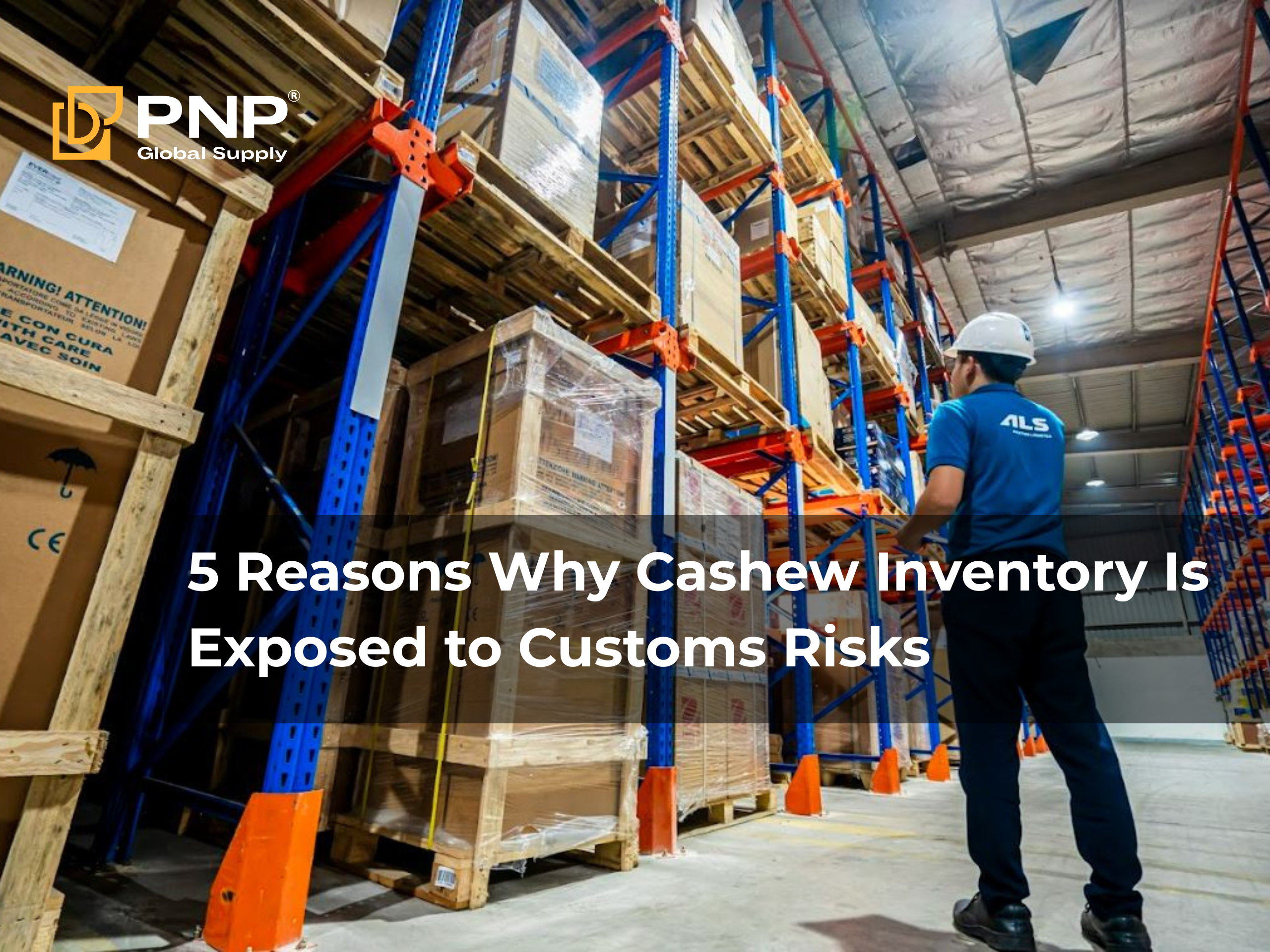
Accurate Inventory Control Helps Reduce Customs Finalization Risks
6. How Can Customs Finalization Reporting Services Reduce Cashew Inventory Risks?
As regulatory authorities tighten data reconciliation requirements, customs finalization reporting services have become a preferred solution for many businesses.
Through customs finalization reporting services, companies can:
- Review inbound – outbound – inventory data
- Reconcile warehouse records with customs documentation
- Standardize production norms
- Complete inventory reports
- Optimize inventory management processes
As a result, businesses can reduce internal workload and minimize discrepancies during customs finalization.
PNP Logistics provides professional customs finalization reporting services to help businesses control inventory more effectively, reduce data inconsistencies, and optimize import–export operations. Visit the PNP Logistics website to explore solutions tailored to your business.
PNP Logistics Provides Professional Customs Finalization Reporting Services
Conclusion
Customs risks related to cashew inventory mainly arise from inconsistencies between actual production data and management records. Discrepancies in inventory movement reports, ineffective inventory management practices, accounting errors, limited inventory control, and insufficient inventory reporting can all expose businesses to inspections or additional customs obligations.
If internal resources are limited, using customs finalization reporting services can be an effective solution to standardize data, reduce risks, and improve operational efficiency.
________________________________
Contact us for more information
Facebook: PNP Logistics
Phone: 039 880 2946
Email: info@pnpglobalsupply.com