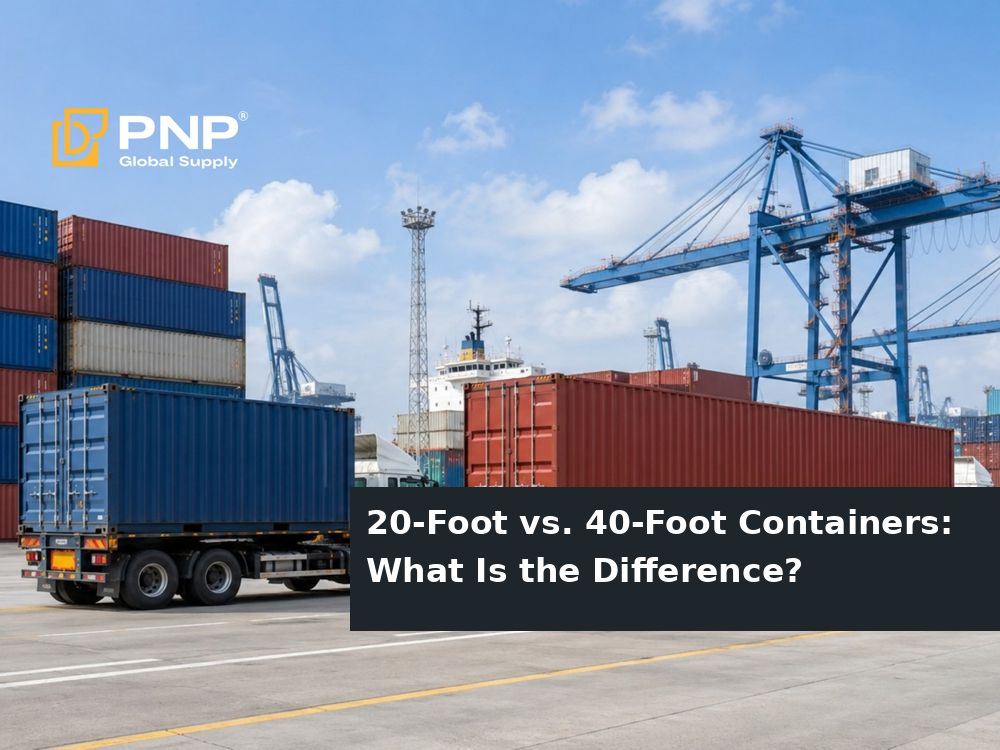
20-foot and 40-foot containers are two common container types used in international cargo transportation. However, they differ in dimensions, cargo capacity, and load limits. Choosing the right container helps businesses optimize space and transportation costs. So, what is the difference between 20-foot and 40-foot containers? Let’s explore the details below.
1. What Are 20-Foot and 40-Foot Containers?
- 20-foot container: A standard container approximately 20 feet long, commonly used for cargo that is heavy but not overly bulky. It is also widely used in sea freight and international import and export.
- 40-foot container: A container approximately 40 feet long, providing significantly more cargo space than a 20-foot container. It is suitable for goods with large volumes or cargo that requires more loading space.
2. 20-Foot vs. 40-Foot Containers: Dimensions, Load Capacity, and How to Choose
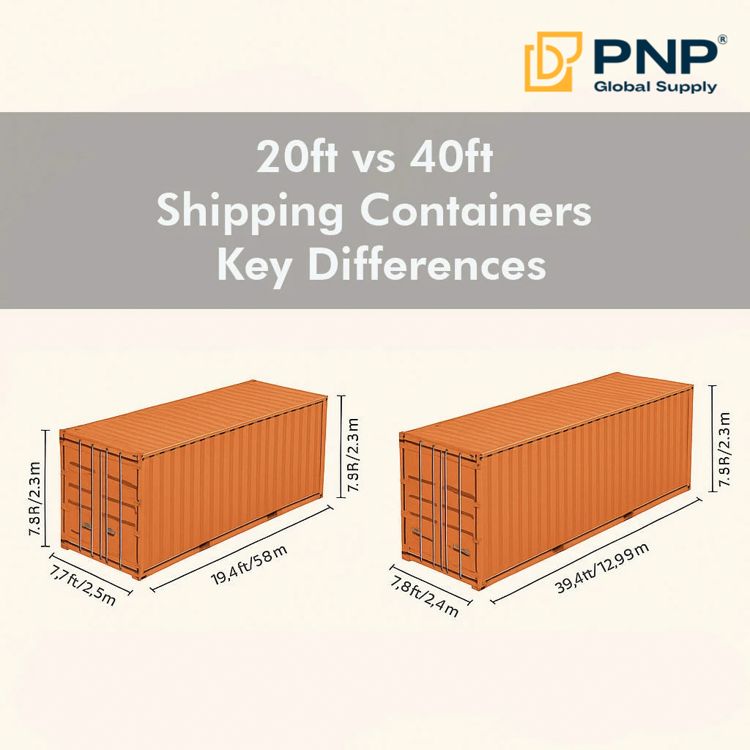
2.1. Dimensions and Capacity of a 20-Foot Container
- 20-foot container dimensions: Consider the external and internal dimensions, door height, and cargo volume to understand the actual usable space.
- How many tons can a 20-foot container hold? Distinguish between the container's maximum gross weight and the actual cargo weight allowed. The practical limit depends on the container specifications, shipping line, port, and shipping route.
- Cargo capacity: Suitable for heavy cargo with relatively moderate volume, helping prevent situations where the cargo reaches the weight limit before fully utilizing the container space.
- Suitable cargo: Commonly used for machinery, metals, construction materials, bagged agricultural products, and other high-density goods.
2.2. Dimensions and Capacity of a 40-Foot Container
- 40-foot container dimensions: Its external and internal dimensions and usable volume are significantly larger than those of a 20-foot container.
- How many tons can a 40-foot container hold? A 40-foot container does not automatically carry twice the weight of a 20-foot container. Actual cargo capacity must be determined based on the container type, technical limits, shipping line, port, and route.
- Cargo capacity: The main advantage of a 40-foot container is its larger volume, making it suitable for cargo that requires more loading space.
- Suitable cargo: Commonly used for garments, furniture, packaging materials, consumer goods, and other lightweight but bulky products.
2.3. What Is the Difference Between 20-Foot and 40-Foot Containers?
- Dimensions and volume: A 40-foot container is longer and has significantly greater cargo volume, making it suitable for larger or higher-volume shipments.
- Load capacity: A 40-foot container does not mean it can carry twice the weight of a 20-foot container. For heavy cargo, the weight limit may determine which container type is more suitable.
- Usage: A 20-foot container is generally better suited to heavy, high-density cargo, while a 40-foot container is more suitable for lightweight, bulky cargo that requires more space.
- Cost: A 40-foot container generally has a higher freight cost, but if its capacity is utilized efficiently, it can reduce transportation costs per unit of cargo.
- Loading efficiency: Businesses should consider both CBM, cargo weight, and the number of packages rather than focusing only on volume. This helps avoid choosing a container that is too small or leaving excessive unused space.
2.4. Should You Choose a 20-Foot or 40-Foot Container?
- Choose a 20-foot container when the cargo is heavy, high-density, relatively moderate in volume, or not sufficient to fully utilize a 40-foot container.
- Choose a 40-foot container when the cargo has a large volume, relatively low weight, and the main goal is to maximize container space.
- For cargo that is both heavy and bulky: Consider both weight and volume to determine which limit will be reached first, then select the appropriate container.
- To optimize costs: Compare total freight, surcharges, and the actual amount of cargo that can be loaded rather than simply comparing the price of 20-foot and 40-foot containers.
- Before booking: Check the container's weight limit, shipping line requirements, origin and destination ports, and shipping route to ensure that the cargo meets all requirements.
- Basic rule: Heavy and less bulky cargo → choose a 20-foot container; large-volume, lightweight, and bulky cargo → choose a 40-foot container.
3. Important Considerations When Loading 20-Foot and 40-Foot Containers
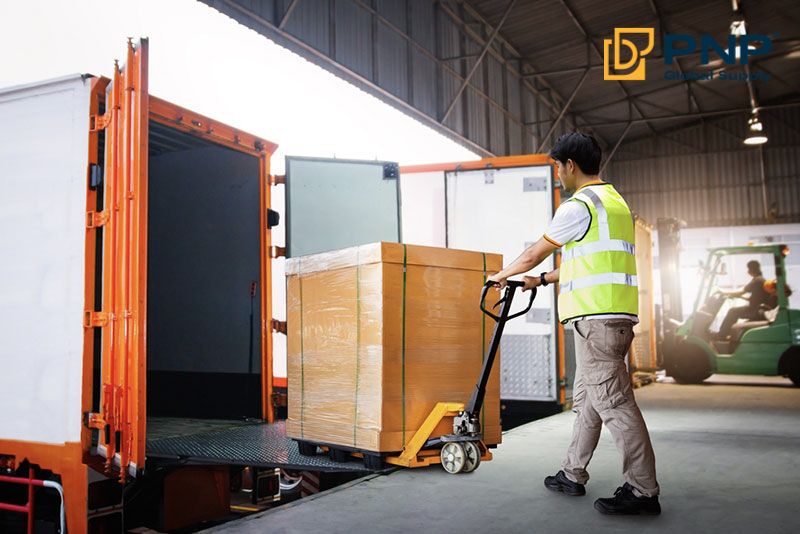
- Check the weight limit: Do not load cargo beyond the permitted container weight or the limits imposed by the shipping line, port, or route.
- Distribute cargo properly: Spread the weight evenly and avoid concentrating heavy cargo in one area to ensure safe transportation.
- Consider both weight and volume: Calculate CBM, the number of packages, and total cargo weight before choosing a 20-foot or 40-foot container.
- Check costs: Compare freight rates, surcharges, and additional expenses to select the most suitable option.
- Check before booking: Confirm the container type, permitted weight, sailing schedule, and shipping line requirements before making a booking.
For import and export shipments that require support with container selection, booking, and transportation, businesses can consider logistics services from PNP Global Supply to receive advice on suitable transportation solutions and shipment tracking throughout the transportation process.
4. Conclusion
20-foot and 40-foot containers mainly differ in dimensions, cargo volume, load capacity, and intended use. A 20-foot container is generally more suitable for heavy cargo, while a 40-foot container is better suited for bulky goods that require more space. Businesses should consider cargo weight, volume, transportation costs, and applicable weight limits to select the right container and optimize transportation efficiency.
Contact Us:
Facebook: PNP Logistics
Phone: 039 880 2946
Email: info@pnpglobalsupply.com