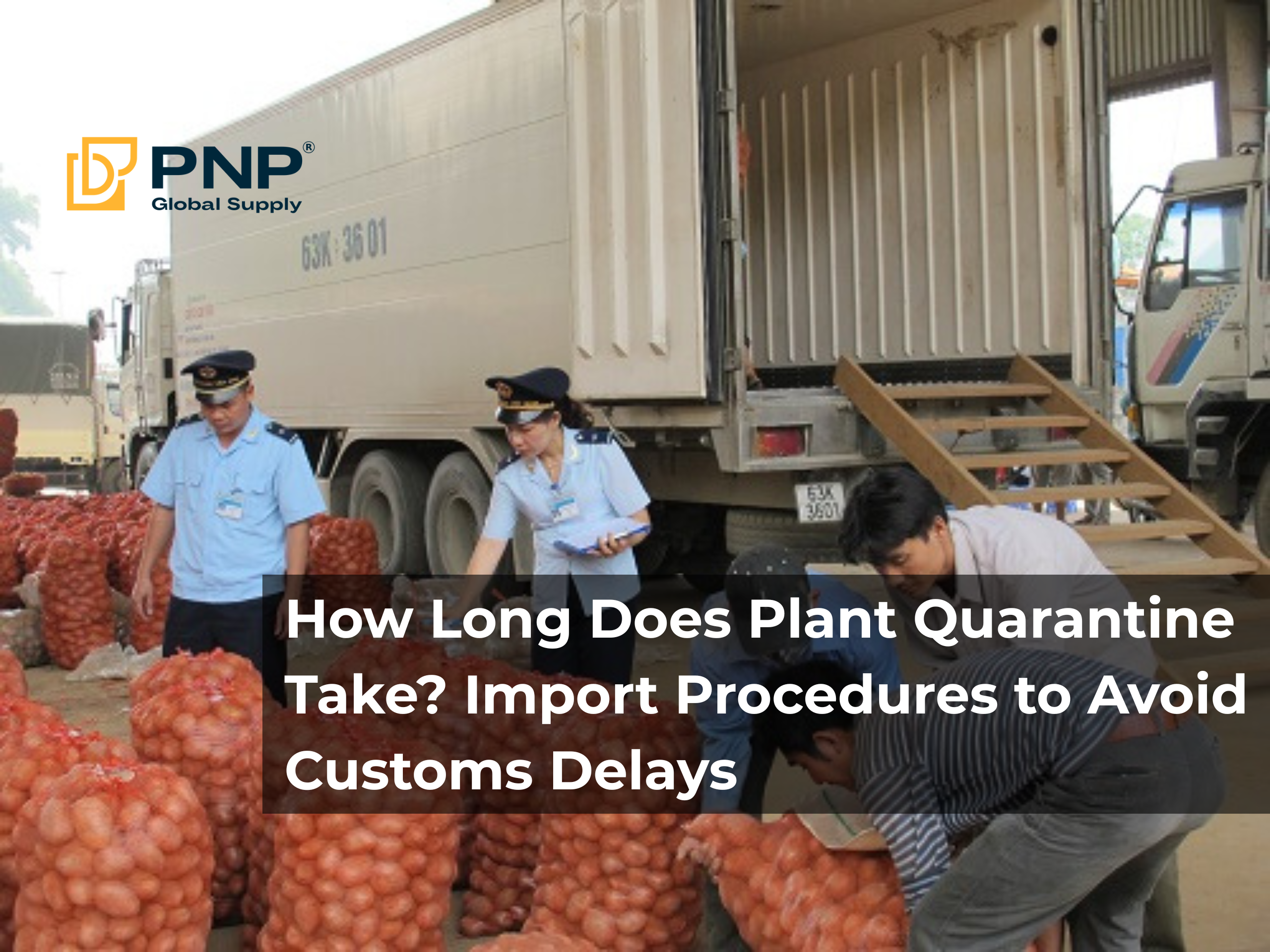
Many businesses experience shipment delays simply because they do not fully understand the import plant quarantine registration process. So, how long does plant quarantine actually take, and what factors can affect the processing time? Understanding the correct procedures and preparing documents properly can help businesses significantly reduce customs clearance delays. In this article, we will explore the detailed process, estimated processing time, and practical solutions to ensure faster and smoother import procedures.
How Long Does Plant Quarantine Take?
1. How Long Does Plant Quarantine Take? Processing Time & What Businesses Need to Know
1.1. Overview of Plant Quarantine and When It Is Required
Plant quarantine is the process of inspecting plant-based goods to prevent the spread of pests and harmful organisms during import and export activities. It is a mandatory requirement for many products such as agricultural goods, timber, seeds, and related plant products.
Businesses must carry out plant quarantine when importing plant-origin goods or when the importing country requires it for exported shipments. Without a phytosanitary certificate, shipments may be held or denied customs clearance.
Therefore, following the correct import plant quarantine registration procedure and accurately completing the plant quarantine declaration can help minimize risks and shorten processing time.
1.2. How Long Does Plant Quarantine Take? Detailed Processing Timeline
The processing time for plant quarantine depends on each stage of the procedure and the accuracy of the submitted documents. If everything is prepared correctly from the beginning, the total processing time is usually around 2–5 working days. However, even minor mistakes can extend the process by several days or up to a week.
Detailed Timeline by Each Stage
- Document Review (1–2 days)
After completing the plant quarantine declaration, the authorities will review the validity of the documents. If information does not match across documents (product name, quantity, HS code, etc.), the application may be returned for correction, causing delays of an additional 1–2 days. - Physical Inspection of Goods (1–3 days)
Quarantine officers inspect the shipment at the port or warehouse to compare it with the submitted documents and assess pest risks. Simple shipments with clear packaging are processed faster, while large-volume or high-risk cargo may require more time. - Sampling and Laboratory Testing (if required) (+2–5 days)
Certain products such as agricultural commodities, seeds, or wood products may require sample testing. This stage often causes the longest delays because processing depends on laboratory analysis. - Issuance of Phytosanitary Certificate (around 1 day)
Once the shipment meets all requirements, the authority issues the phytosanitary certificate, allowing the business to complete customs clearance procedures.
Actual Processing Time
- Smooth process (complete documents, no testing required): 2–3 days
- Standard processing: 3–5 days
- Cases involving laboratory testing or additional issues: 5–7 days or longer
Key Factors Affecting Processing Time
- Type of goods (fresh agricultural products, timber, seeds, etc.)
- Accuracy of the plant quarantine declaration
- Whether laboratory testing is required
- Workload and schedule of quarantine authorities
- Coordination and preparation by the logistics company
2. Detailed Import Plant Quarantine Registration Process
Import Plant Quarantine Registration Procedure
Step 1: Prepare the Documents
Required documents include:
- Application form
- Invoice
- Packing List
- Bill of Lading
- Phytosanitary Certificate
=> All documents should contain consistent information to avoid rejection and delays.
Step 2: Submit the Plant Quarantine Declaration
Submit the declaration through the National Single Window system, providing complete shipment information and uploading all required documents.
=> Accurate submission from the beginning helps minimize amendments and shortens processing time.
Step 3: Document Review by Authorities
The quarantine authority reviews the application:
- Valid documents → proceed to the next step
- Incorrect or incomplete documents → request for revision or supplementation
=> This stage usually takes 1–2 working days.
Step 4: Physical Inspection of Goods
Authorities inspect the shipment at the port or warehouse, compare it with the submitted documents, and may collect samples for testing if necessary.
=> This stage generally takes 1–3 working days, depending on the type of goods.
Step 5: Issuance of the Phytosanitary Certificate
If the shipment meets all requirements, the authority issues the phytosanitary certificate, allowing the goods to be imported legally.
=> This is the final step before customs clearance.
3. How to Avoid Delays & Optimize the Plant Quarantine Process
Optimized Solutions for Plant Quarantine
3.1. Common Causes of Delays in Plant Quarantine
Plant quarantine procedures typically take 2–5 working days, but the process may take longer if the following issues occur:
- Incorrect information in the plant quarantine declaration (product name, HS code, quantity)
- Missing or inconsistent documents (Invoice, Packing List, certificates, etc.)
- Shipments requiring detailed inspection or laboratory testing
- Lack of proactive coordination for inspection scheduling
➡ These mistakes can extend processing time by several days or even up to a week.
3.2. Solutions to Reduce Plant Quarantine Processing Time
To optimize plant quarantine processing time, businesses should:
- Prepare complete and accurate documents from the beginning
- Follow the correct Import Plant Quarantine Registration Process
- Submit accurate plant quarantine declarations and avoid multiple amendments
- Proactively coordinate inspection schedules with relevant authorities
In practice, many businesses choose to work with professional service providers to streamline the entire process. PNP Global Supply is one of the companies experienced in import-export operations and direct coordination with quarantine authorities, helping businesses complete procedures faster and more accurately. Instead of handling each step independently—where errors can easily occur—PNP supports businesses from document checking and quarantine registration to inspection coordination, thereby minimizing risks and reducing delays.
4. Conclusion
Plant quarantine procedures usually take 2–5 working days, but the process can be extended if documents are incorrect or additional inspections are required. Therefore, businesses should follow the correct import plant quarantine registration process, ensure accurate declarations, and prepare complete documentation to reduce processing time and achieve smooth customs clearance.