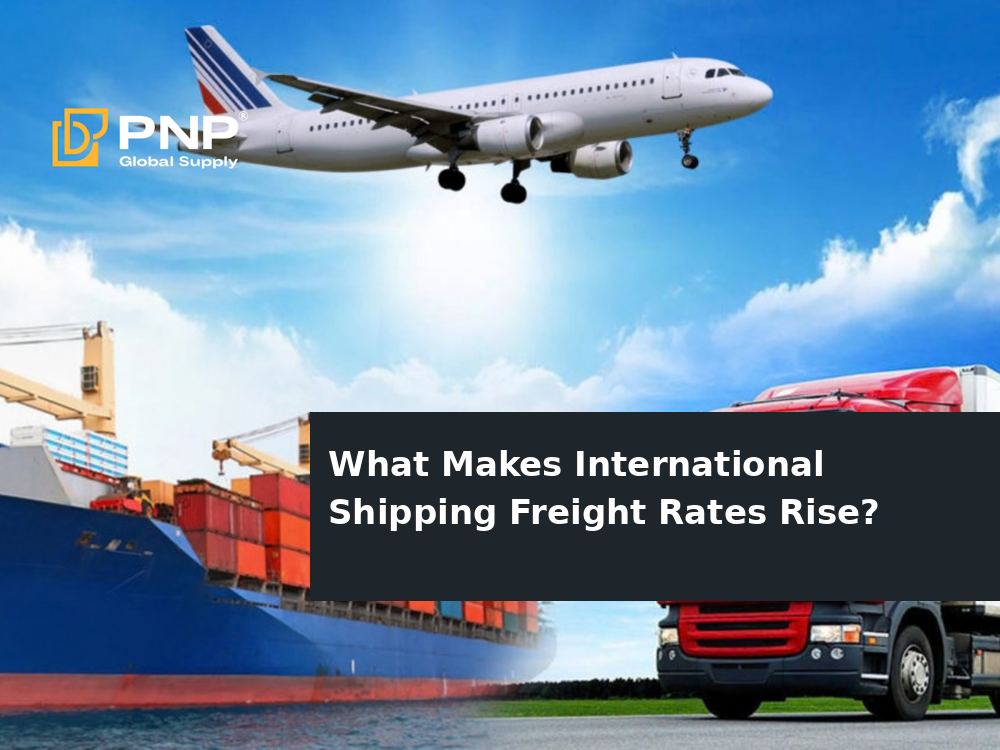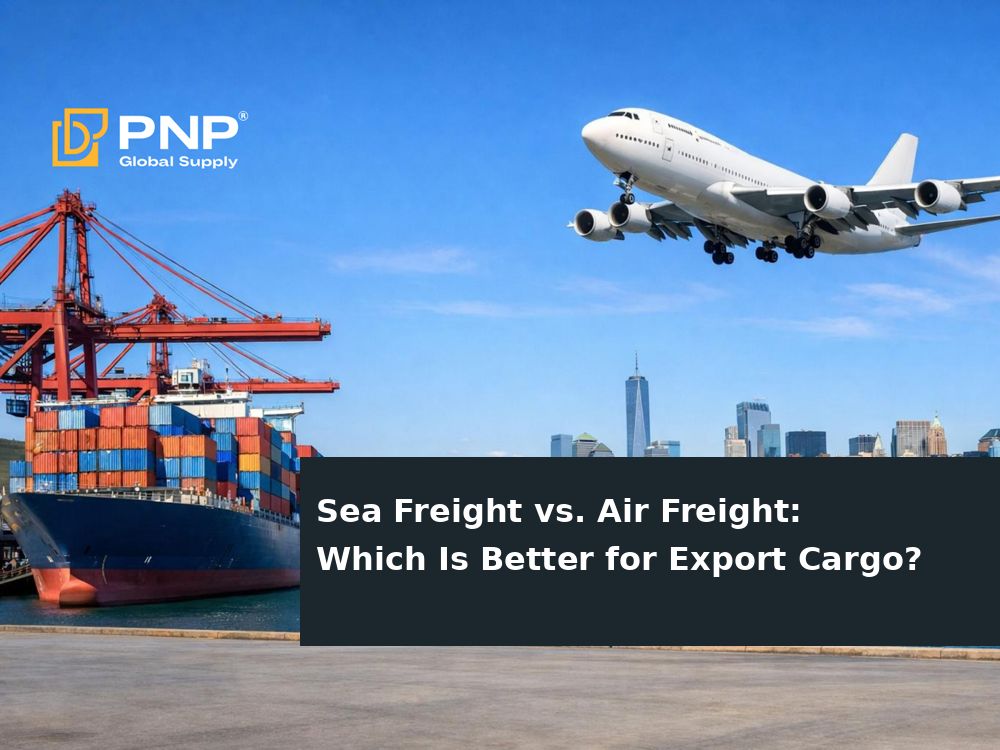
When exporting goods, sea freight and air freight are two common transportation methods, each offering different advantages in terms of cost, transit time, and carrying capacity. Sea freight is generally suitable for large shipments where cost efficiency is a priority, while air freight is more suitable for cargo that needs to be delivered quickly. So, which option should businesses choose? Let’s explore the details below.
1. What Are Sea Freight and Air Freight?
1.1. Sea Freight
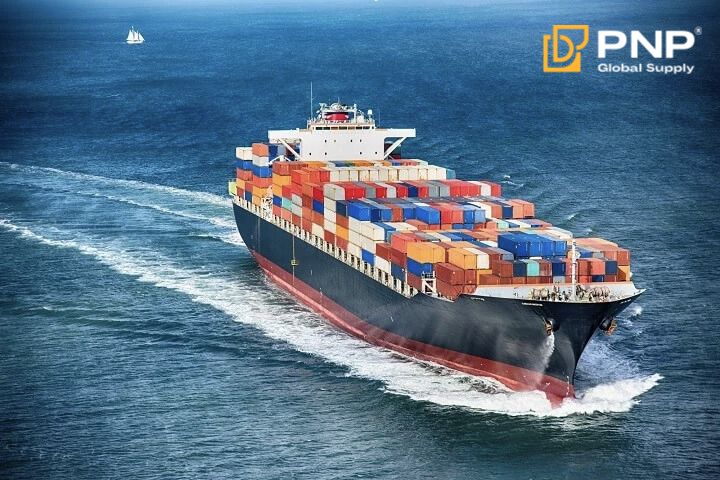
- Sea freight is a transportation method that moves goods by vessel between domestic or international ports.
- Cargo is transported in various forms, with shipping containers being the most common for international shipments.
1.2. Air Freight
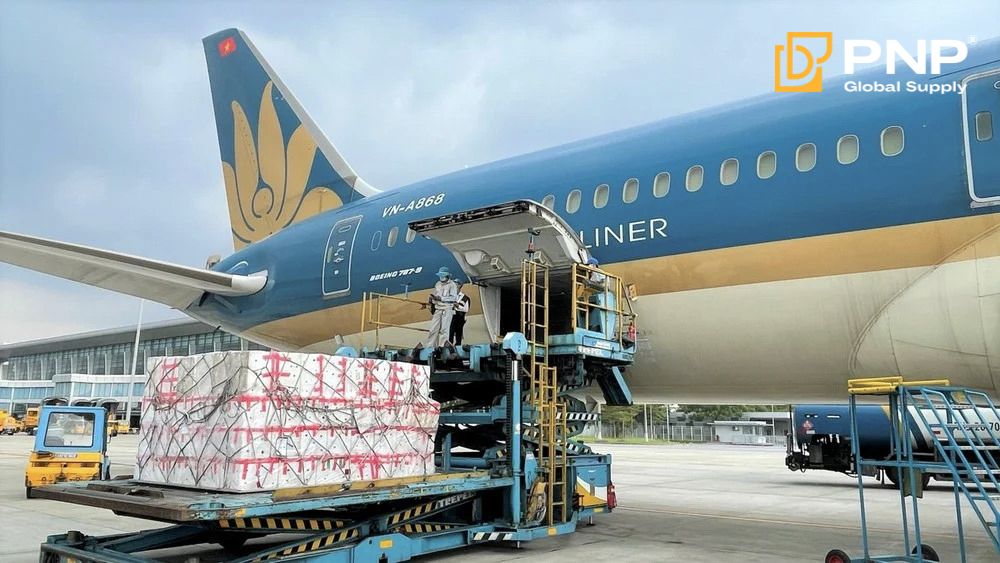
- Air freight is a transportation method that moves goods by aircraft between origin and destination airports.
- Cargo is handled and transported through air cargo carriers or logistics providers.
2. Comparison Between Sea Freight and Air Freight
2.1. Transit Time
- Sea freight: Transit times are generally longer due to vessel schedules, port handling, and ocean transportation. It is suitable for shipments that do not require urgent delivery.
- Air freight: Transit times are significantly shorter, making it suitable for cargo that needs to arrive on time, perishable goods, or products with a short shelf life.
2.2. Transportation Costs
- Sea freight: Sea transportation costs are generally lower, especially for large shipments or full container loads (FCL). However, total costs may also include ocean freight, port charges, documentation fees, and other surcharges.
- Air freight: Air freight rates are generally higher due to faster transportation and aircraft operating costs. Rates are usually calculated based on chargeable weight, volume, route, and cargo type.
- Therefore, if cost savings are the priority, sea freight generally has an advantage; if speed is the priority, air freight is more suitable.
2.3. Cargo Weight, Volume, and Type
- Sea freight: Offers high carrying capacity for heavy and large-volume cargo, making it suitable for full container loads, machinery, raw materials, agricultural products, and bulky goods.
- Air freight: More suitable for lightweight, high-value goods, samples, components, perishable products, or urgent replenishment shipments.
- When choosing a transportation method, businesses should consider weight, volume, and cargo characteristics rather than relying solely on freight rates.
2.4. Advantages and Disadvantages of Each Method
Sea Freight:
- Advantages: High carrying capacity, competitive costs, and suitable for international ocean transportation.
- Disadvantages: Longer transit times and potential disruptions caused by vessel schedules, weather, or port conditions.
Air Freight:
- Advantages: Fast transit times, more predictable delivery schedules, and suitable for high-value goods.
- Disadvantages: Higher freight costs and limitations on the size, weight, and types of cargo that can be transported.
3. Should You Choose Sea Freight or Air Freight?
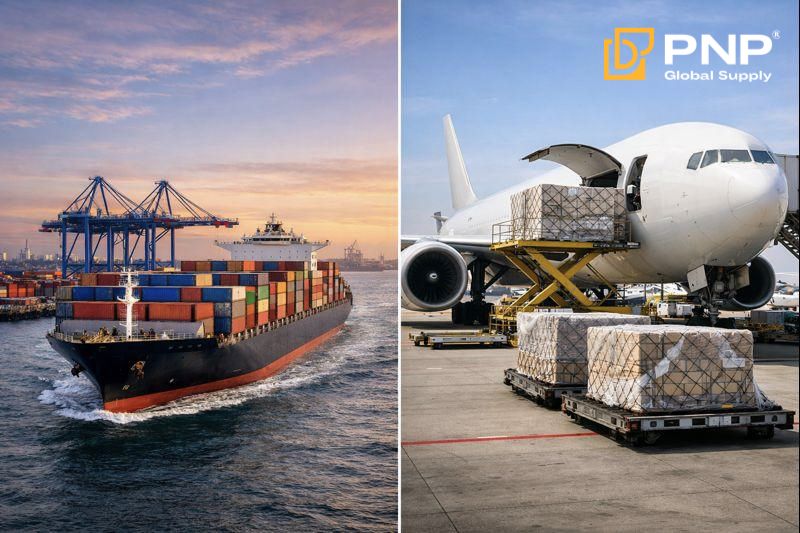
3.1. When Should You Choose Sea Freight?
- Large or bulky shipments: Sea freight is suitable for full container loads, machinery, raw materials, agricultural products, and bulky cargo.
- No urgent delivery requirement: Suitable for shipments with flexible delivery schedules that can accommodate vessel transit times.
- Cost savings are a priority: Sea freight is generally more cost-effective than air freight for large shipments.
- International transportation: Suitable for import and export shipments using established international ocean routes.
3.2. When Should You Choose Air Freight?
- Urgent shipments: Suitable for orders with short delivery deadlines or urgent inventory replenishment.
- Lightweight, high-value goods: Often suitable for components, samples, electronics, fashion products, and goods with high value relative to their weight.
- Perishable goods: Can be considered when shorter transit times are needed to minimize the impact on product quality.
- Willing to pay higher transportation costs: Air freight costs more, but businesses benefit from faster transit and delivery.
3.3. Criteria for Choosing the Right Transportation Method
- Weight and volume: The heavier, bulkier, and larger the shipment, the more advantageous sea freight can be; smaller and more compact shipments may be suitable for air freight.
- Delivery time: If the shipment is not urgent, sea freight is generally preferable; if fast delivery is required, air freight may be the better choice.
- Total transportation cost: Compare freight rates, surcharges, port/airport charges, and other related costs instead of looking only at the basic freight rate.
- Cargo characteristics: Consider cargo value, perishability, storage requirements, and transportation conditions.
- Shipping route: Check the origin and destination ports/airports, vessel or flight schedules, service frequency, and estimated transit time.
- Buyer requirements: Consider the delivery deadline and terms of delivery specified in the contract when selecting the appropriate transportation method.
For businesses that need support in choosing the right transportation method, PNP Global Supply's logistics services can provide advice on transportation solutions, booking, documentation, and shipment tracking based on actual business requirements.
4. Conclusion
Sea freight is suitable for large, bulky shipments where cost efficiency is a priority, while air freight is more suitable for goods that require fast delivery, have high value, or have strict time requirements. Businesses should consider cost, transit time, weight, volume, and cargo characteristics to select the most suitable transportation method and ensure efficient export operations for each shipment.
Contact Us:
Facebook: PNP Logistics
Phone: 039 880 2946
Email: info@pnpglobalsupply.com