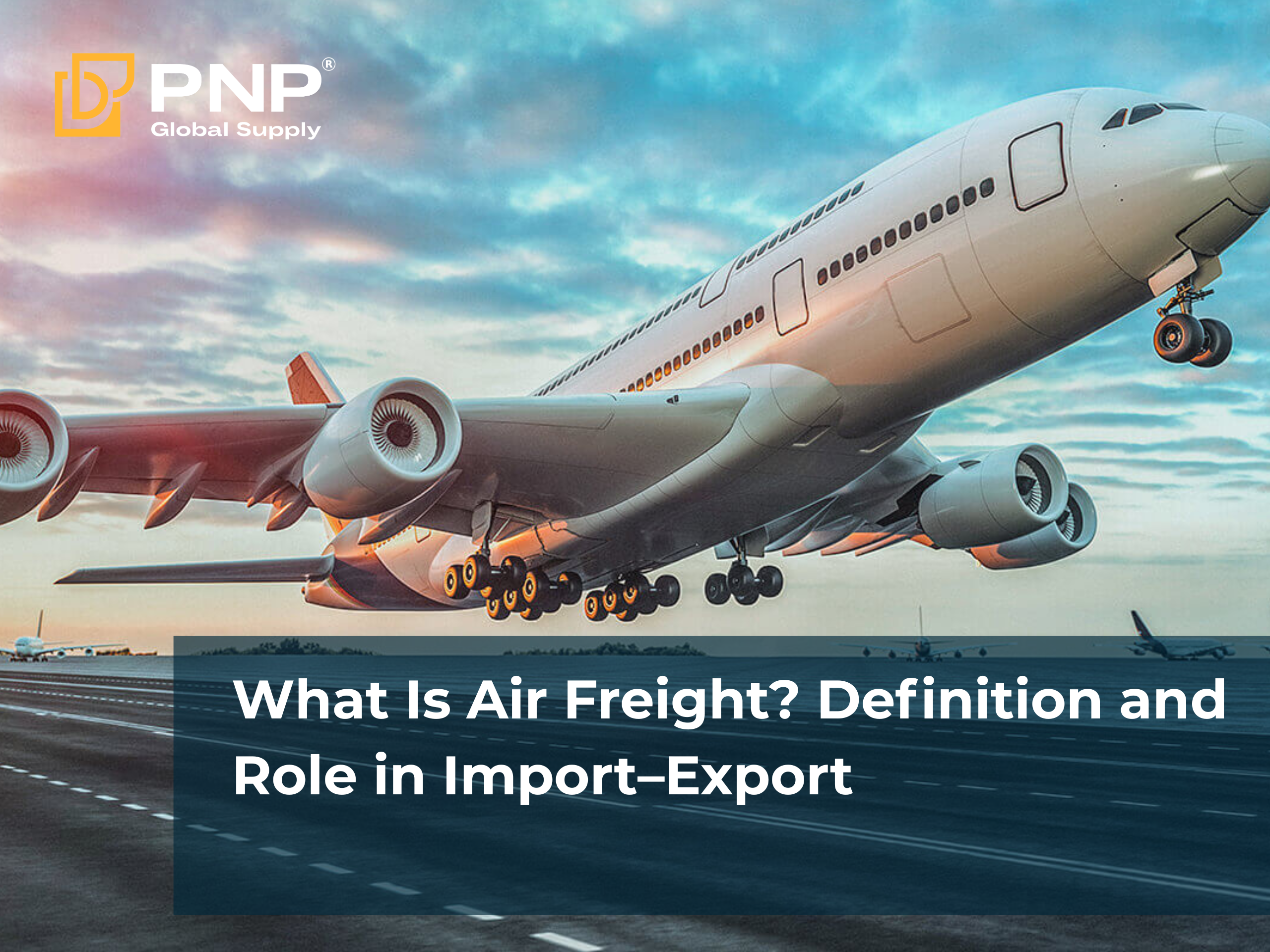
In international trade, many businesses need fast and timely delivery. Air freight is an ideal solution, using aircraft to transport goods at high speed with strong safety standards. This article helps you understand what air freight is, along with its advantages, disadvantages, costs, and how it works.
1. What Is Air Freight?
Air freight is a method of transporting goods by air, enabling fast and secure delivery between countries or regions.
1.1. Advantages of Air Freight
Air freight offers three main benefits. First, speed: goods are delivered in a short time, making it ideal for urgent shipments. Second, high safety: it reduces the risk of damage or loss compared to other transport methods. Third, suitability for high-value goods: it is ideal for perishable, expensive, or time-sensitive products.
1.2. Disadvantages of Air Freight
However, air freight also has some limitations. The cost is relatively high compared to sea or road transport. There are restrictions on cargo types, meaning oversized, hazardous, or bulky goods may not be accepted. In addition, delivery schedules depend on flight availability and capacity.
2. How Much Does Air Freight Cost?
Air freight rates are not fixed and typically range around:
– Approximately $1–5/kg for general cargo
– Around $8–10/kg when including full surcharges
The calculation is based on:
Freight cost = Rate × Chargeable weight
Chargeable weight is determined by either actual weight or volumetric weight, whichever is higher.
Additional costs may include fuel surcharges, security fees, airport handling charges, customs clearance, and delivery fees.
3. Air Freight Process
The air freight process generally includes three main steps to ensure fast, safe, and compliant delivery.
First, cargo acceptance: goods are received, and details such as quantity, type, and transport conditions are checked.
Second, packing and declaration: goods are packed according to aviation standards, and all necessary documents and customs declarations are prepared.
Third, transportation and delivery: goods are shipped by air, tracked throughout the journey, and delivered either to the destination airport or directly to the customer.
Following the correct process helps reduce clearance time, minimize risks, and optimize costs.
4. What Do Air Logistics Services Include?
Air logistics services typically cover international and domestic transportation, allowing fast delivery from airport to airport or door to door. They also include customs clearance to ensure compliance with import–export regulations, as well as warehousing and distribution services to store, manage, and deliver goods safely and on time.
5. Vietnam’s Air Freight Market
Vietnam’s air freight sector is growing rapidly, supporting both international trade and domestic express delivery. Major airports such as Tan Son Nhat, Noi Bai, and Da Nang serve as key logistics hubs.
Common routes include international shipments from Vietnam to the United States, the EU, Japan, and South Korea, as well as domestic routes connecting Ho Chi Minh City, Hanoi, and Da Nang. These routes meet the demand for fast delivery, high-value goods, and urgent shipments.
6. Should You Use an Air Logistics Company?
Using an air logistics service provider helps businesses save time, reduce documentation errors, and ensure fast and secure delivery. These companies often provide end-to-end services, including cargo pickup, packing, customs declaration, and final delivery. They also offer consulting on costs, routes, and optimal shipping methods to minimize risks.
Some reputable logistics companies in Vietnam include An Phuc Logistics, Expeditors Vietnam, and PNP Logistics, which provide comprehensive air freight solutions to optimize cost, efficiency, and safety.
7. Notes for Air Freight Shipping
When using air freight, businesses should pay attention to several important factors. Proper packaging is essential to protect goods from impact and pressure during transit. It is also necessary to check prohibited or restricted items, including dangerous goods that may require special permits. In addition, all required documents such as commercial invoices, packing lists, import–export declarations, and quarantine certificates must be prepared to ensure smooth customs clearance.
Following these guidelines helps shorten processing time, reduce risks, and ensure cargo safety.
8. Conclusion
Air freight is a fast and reliable transportation method, especially suitable for high-value or urgent goods. Understanding its process, costs, and requirements allows businesses to choose the right shipping method, optimize delivery time, minimize risks, and improve overall efficiency in import–export operations.
________________________________
Contact us for more information
Facebook: PNP Logistics
Phone: 039 880 2946
Email: info@pnpglobalsupply.com