In agricultural import-export activities, inspecting production facilities plays a key role in ensuring product quality, meeting international standards, and complying with the requirements of importing markets. Depending on the type of export manufacturing, businesses must strictly follow factory inspection regulations to avoid risks such as shipment rejection, supply chain disruptions, or damage to brand reputation. This article provides a detailed guide to help businesses better understand the inspection process, evaluation criteria, and how to prepare effectively for inspections.
1. Why Do Businesses Need Factory Inspections?
In today’s manufacturing and import-export industries, factory inspection is an essential step that helps businesses ensure operational safety, maintain production quality, and comply with legal requirements. Especially for companies operating in logistics services, industrial manufacturing, or goods export, regular factory inspections and evaluations help minimize risks related to building structures and workplace safety.
In addition, for businesses involved in import-export activities, having a standard-compliant factory helps meet import-export conditions required by authorities and international standards. This is an important factor in enhancing brand reputation, increasing competitiveness, and building customer trust.
For the logistics service industry, owning warehouses and factories that meet standards also helps optimize cargo storage, reduce damage during preservation, and improve supply chain efficiency. Therefore, investing in factory inspections is not only a safety solution but also a sustainable development strategy for businesses.
Officers inspecting a production facility
2. The Role of Production Facility Inspections in Export Activities
In the context of global integration, importing countries are tightening quality standards more than ever. Therefore, production facility inspections provide many practical benefits for businesses:
- Ensuring products meet international standards
- Increasing competitiveness in the market
- Reducing the risk of returned goods or import bans
- Enhancing brand reputation
Especially in the agricultural import-export sector, conducting thorough inspections from the beginning helps minimize risks throughout the entire supply chain.
3. Common Types of Export Manufacturing and Their Impact on Inspections
Depending on product characteristics and target markets, businesses can choose suitable export manufacturing models. Some common types include:
- Direct manufacturing at domestic facilities for export
- Processing and manufacturing for foreign partners
- Production following importing market standards (GlobalGAP, HACCP, etc.)
- Cooperation between raw material areas and packaging facilities
In practice, each type of export manufacturing has different inspection requirements depending on product characteristics and target markets. For example, businesses producing directly for export often need to prove that the entire process, from raw materials to finished products, is strictly controlled. Meanwhile, contract manufacturing for foreign partners requires compliance with the customer’s specific standards, which may even be stricter than domestic regulations.
In addition, for businesses manufacturing according to international standards such as GlobalGAP, HACCP, or ISO, production facility inspections mainly focus on quality management systems and risk control procedures. In the agricultural import-export industry, the model connecting raw material regions, packaging facilities, and export operations is becoming increasingly common, leading to synchronized inspections from cultivation areas to processing stages. This shows that selecting the right export manufacturing model directly affects the complexity of the inspection process.
Common export manufacturing models
4. Production Facility Inspection Process
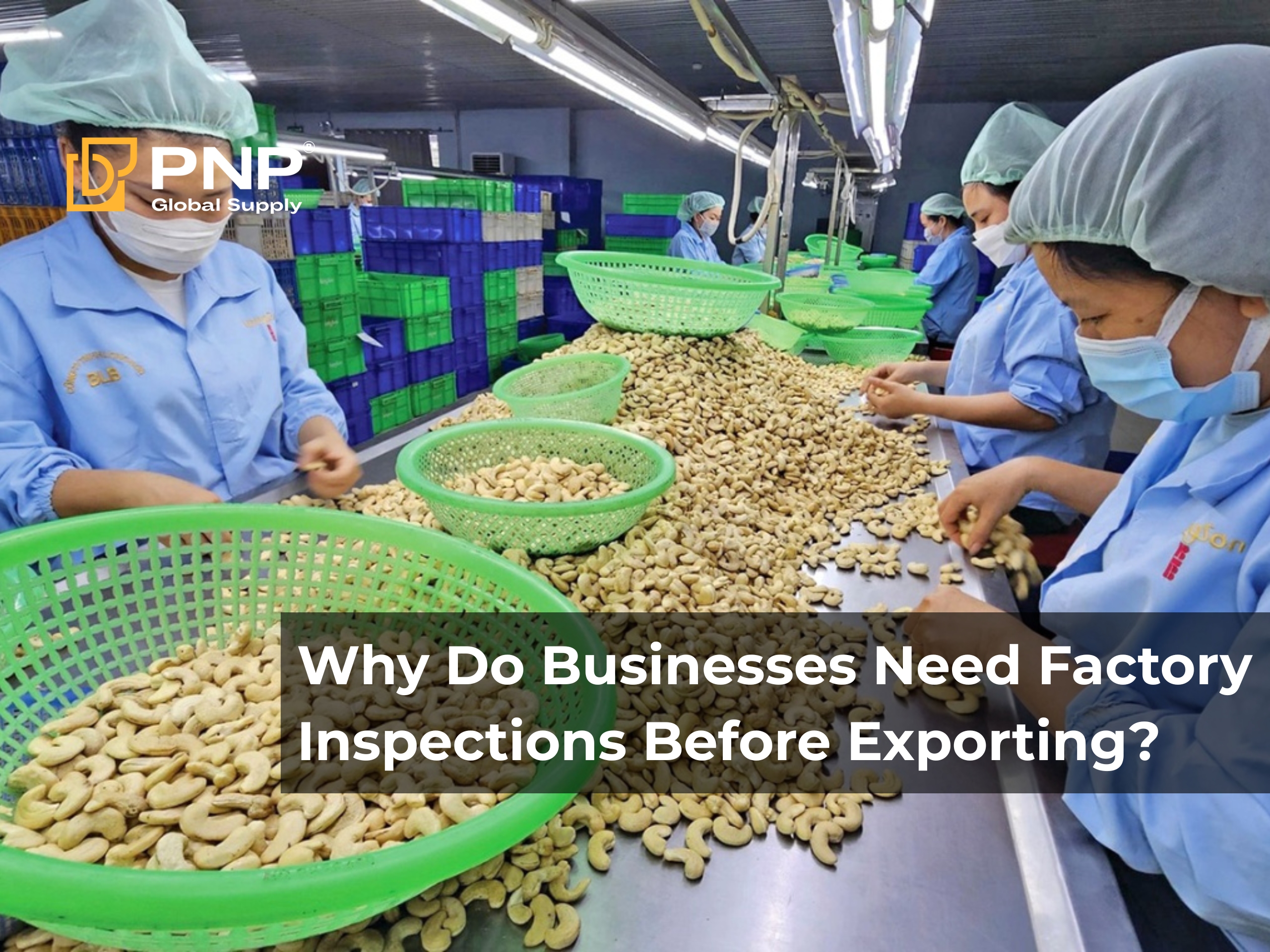
The production facility inspection process is usually carried out through specific steps. First, businesses need to register for inspection with the relevant authorities and prepare all documents related to production activities. After receiving the documents, inspectors will conduct on-site evaluations, including inspections of factories, production lines, quality control systems, and hygiene conditions.
During the inspection, officers may request additional documents or explanations regarding production procedures. If the facility fully meets the requirements, the business will receive certification proving it is qualified for production activities supporting agricultural import-export operations. Otherwise, the business must correct non-compliant issues before a re-inspection can take place.
Quality control procedures within the production process
Conclusion
It can be seen that production facility inspection is an essential step in agricultural import-export activities. Complying with production facility inspection regulations, choosing the appropriate export manufacturing model, and preparing thoroughly will help businesses improve product quality, minimize risks, and enhance competitiveness in international markets. This is not only a mandatory requirement but also a foundation for sustainable growth in the export industry.